Do you want EV news in your mailbox every week – SUBSCRIBE
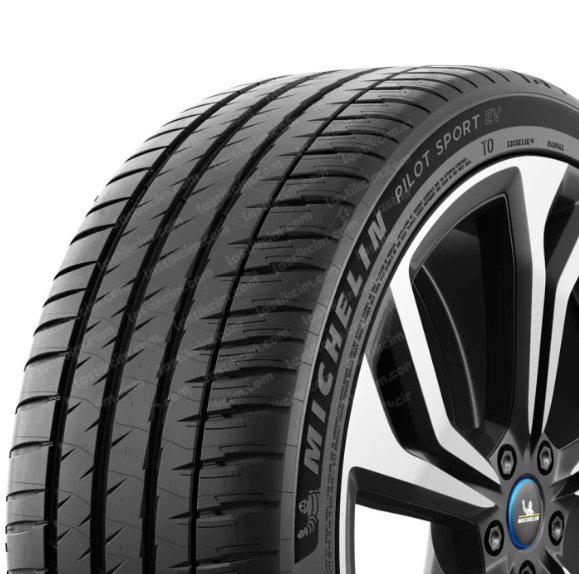
Michelin Pilot Sport EV/235/55R19 105W XL Acustic
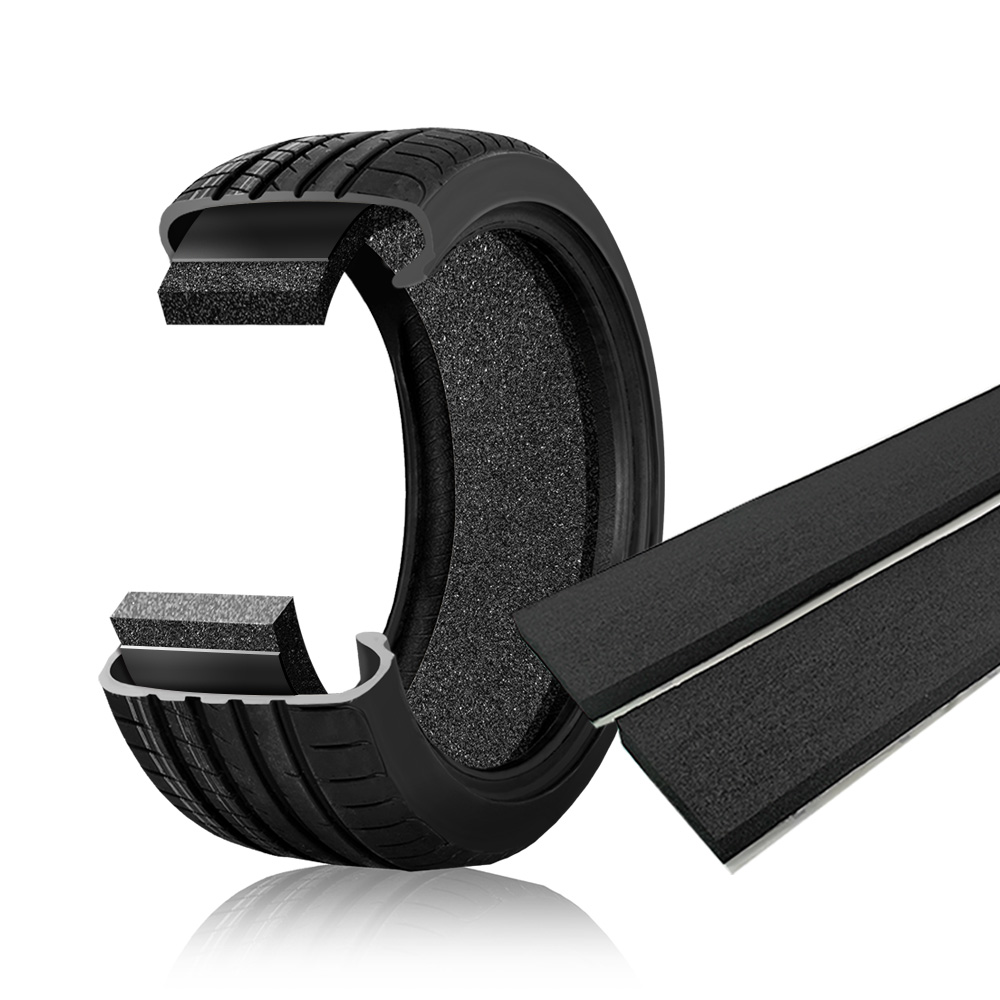
How acoustic foam in EV tires works
Here’s the up-to-date “best in test” snapshot for summer EV tyres (2025)
EV-SUV size (235/55 R19 —
common for ID.4/Enyaq, Ioniq 5/EV6, Model Y)
- Winner: Michelin Pilot Sport 4 SUV — best safety overall, topping wet handling and straight-line aquaplaning; slightly firm/less quiet. (tire-reviews.com)
- 2nd: Nokian Hakka Black 3 (SilentDrive for EVs) — quietest on test, strongest wet braking; very solid all-round. (tire-reviews.com)
- 3rd: Pirelli Scorpion — most comfortable / good value; a touch less ultimate grip than the top two. (tire-reviews.com)
- Also highly rated: Goodyear Eagle F1 Asymmetric 6 (excellent wet grip on the circle) and Continental PremiumContact 7 (great steering & efficiency; weaker aquaplaning/comfort). (tire-reviews.com)
EV-specific summer tyres (215/55 R18 class,
Auto Bild’s dedicated EV test)
- Winner: Hankook iON evo — “exemplary” overall; shortest dry stops, top wet handling; good efficiency. (Tire Reviews)
- 2nd: Continental PremiumContact 7 — best wet braking; tiny gap to winner, but higher rolling resistance. (Tire Reviews)
- 3rd / Green award: Goodyear EfficientGrip 2 SUV — standout tread life and low running costs. (Tire Reviews)
—————————————————————————————————————————–
Here’s a technical breakdown of how the new “acoustic foam” in EV tyres works — and when it actually matters.
🔧 How acoustic foam in EV tires works
Core concept: killing “cavity noise”
- A tire is basically a hollow air chamber → behaves like a drum
- When rolling, road impacts create vibrations → air inside resonates
- This creates a low-frequency “booming” noise in the cabin (michelinman.com)
What the foam does
- A polyurethane foam ring is glued to the inside of the tire
- It:
- Absorbs vibration energy
- Breaks up sound waves inside the cavity
- Converts sound → tiny amounts of heat (aslong.cc)
👉 Result:
- Less resonance transmitted through suspension → quieter cabin
- Typically ~20% noise reduction or up to ~9 dB depending on tire/car (michelin.com.au)
✅ Pros (where it actually delivers value)
1. Much quieter cabin (especially in EVs)
- EVs have no engine masking noise → tire noise dominates
- Foam targets exactly that frequency band
✔ Biggest benefit at 80–130 km/h motorway speeds
2. Reduces “boomy” fatigue noise
- Cuts low-frequency resonance (the annoying part)
- Makes long drives less tiring
✔ Perceived as premium/luxury refinement
3. Works across surfaces (partly)
- Still quieter even on rough asphalt
- But effect varies (see cons)
4. No impact on grip/safety
- Foam doesn’t change tread or compound
✔ Performance characteristics remain intact (michelinman.com)
❌ Cons (important, often overlooked)
1. Limited real-world effect in some cases
- If road surface is very rough → noise dominated by external road texture
- Foam only fixes internal resonance
👉 So difference can be: - Huge on smooth asphalt
- Minimal on coarse Nordic roads (Eleport)
2. More difficult (and costly) repairs
- Puncture repair requires:
- Removing or cutting foam
- Re-gluing or replacing
✔ Many workshops charge more or avoid it (aslong.cc)
3. Slight weight increase
- Adds small mass → theoretically:
- Tiny efficiency loss
- In practice: negligible for most EVs
4. Cost premium
- Typically +10–30% vs standard tire (aslong.cc)
5. Potential imbalance / aging issues (edge case)
- If foam:
- Comes loose
- Absorbs moisture
→ can cause vibration or balancing issues (rare but reported) (torquenews.com)
⚖️ Bottom line (practical reality)
When it’s worth it
- You care about:
- Quietness at 100–130 km/h
- Premium feel (EX60 / Polestar / BMW class)
- You drive:
- Motorway / smooth asphalt frequently
👉 Then: clear upgrade
When it’s NOT worth it
- Mostly:
- City driving (<70 km/h)
- Rough Nordic chip-seal roads
👉 Then: difference is often small vs good non-foam tire
🧠 Key insight (most people miss this)
Acoustic foam does NOT reduce all tire noise — only:
internal resonance (cavity noise)
It does NOT fix:
- Road texture noise
- Wind noise
- Suspension-transmitted vibration
Do you miss anything regarding EV’s on this site – send an email to info@ev-erything.com