



Do you want EV news in your mailbox every week – SUBSCRIBE
There are several material developments worth flagging
of 19 September 2026.
🌍 1. Europe is currently the global EV growth engine
Global BEV+PHEV sales reached about 1.83 million in August, +2% year-on-year, bringing 2026 YTD sales to roughly 13.4 million. But that global number hides a major divergence: Europe rose 36% to ~380,000, China fell 11% to ~1.03 million, North America fell 33% to ~140,000, while the rest of the world surged 97% to ~290,000. (Investing.com)
Even more striking, European pure-BEV registrations jumped 54.2% YoY in August, reaching 30.5% of new registrations across the 16 markets in the Reuters dataset. (Reuters)
Why it matters: the EV transition hasn’t stalled globally; its centre of growth is shifting. Europe is currently accelerating much faster than North America, while emerging markets outside the traditional big three are becoming increasingly important.
🇨🇳 2. China is shifting from domestic growth toward exports
China remains by far the largest EV market, but its domestic market has cooled. Chinese manufacturers are consequently pushing harder into Europe and other export markets.
That’s now creating another EU-China trade issue. China said yesterday that it is monitoring possible EU measures concerning Chinese plug-in hybrids, in addition to the existing dispute over Chinese BEVs. (Reuters)
BYD’s strategy is particularly interesting: it isn’t just exporting passenger cars anymore. It plans to manufacture electric heavy trucks in Europe, part of a strategy to become increasingly localized within Europe. (Reuters)
Watch: BYD, Geely/Zeekr, Xpeng and Leapmotor increasingly becoming European manufacturers with Chinese ownership/technology, rather than simply Chinese exporters.
🔴 3. Volkswagen Group: biggest negative development this week
This is more serious than when we discussed VW previously.
Volkswagen announced approximately €10 billion in one-off costs yesterday and cut its expected 2026 operating margin from 4–5.5% to no more than 1%.
Around €6 billion of the impairment relates to Porsche. VW specifically points to the deteriorating Chinese market, Asian competition entering Europe and the transition toward lower-margin BEVs. (Reuters)
This doesn’t mean VW’s EV business is collapsing. The problem is profitability while simultaneously funding the transition to EVs, batteries and software.
The upcoming affordable VW Group EV generation—ID. Polo and related Cupra/Škoda models—is therefore becoming strategically extremely important.
🔋 4. LFP continues to win the chemistry battle
The latest IEA data reinforces something we’ve been following for some time.
Global EV battery deployment reached approximately 1.2 TWh in 2025, up almost 30%.
But the interesting part is chemistry.
LFP continues expanding because it eliminates cobalt and nickel while providing good longevity, safety and increasingly competitive energy density. Modern leading cells can reach approximately:
LFP: ~205 Wh/kg
Sodium-ion: ~175 Wh/kg
NMC: ~265 Wh/kg
(IEA)
The difference between LFP and NMC is therefore getting smaller.
This also makes Mazda’s decision to use a new 78-kWh LFP battery in the MY2027 Mazda6e completely consistent with the global trend
🧂 5. Sodium-ion is becoming genuinely interesting
This is one of the technologies I’d now move from “interesting research” to worth actively monitoring.
The IEA says sodium-ion is entering its scale-up phase, led particularly by CATL and BYD.
Current leading cells can reach around 175 Wh/kg and retain approximately 90% of nominal capacity at −40°C. (IEA)
That last number is particularly interesting for Sweden.
The disadvantages remain lower energy density and immature supply chains. For now, sodium-ion makes the most sense for:
small EVs → urban vehicles → commercial vehicles → stationary storage → potentially hybrid sodium/lithium battery packs.
I wouldn’t expect it to replace LFP universally. Instead, I expect another segmentation:
cheap/small EV → sodium-ion
mainstream EV → LFP/LMFP
long-range/performance → NMC/high-nickel
premium future → potentially solid-state
🧪 6. Solid-state: progress, but keep the hype filter switched on
The IEA’s latest assessment is useful because it’s considerably more conservative than many manufacturer announcements.
True all-solid-state batteries remain prototype technology. Small-scale cells exist, but manufacturing cost, pack integration and the mechanical pressure required during operation remain substantial challenges. (IEA)
Semi-solid batteries are much further along.
So for the next EV you buy, I’d place considerably more weight on a very good LFP/NMC battery + 800V architecture + excellent thermal management than promises of imminent solid-state technology.
⚡ 7. Charging: peak kW is becoming the wrong number
The industry is moving beyond simply advertising:
“Maximum charging = 250/300/400 kW.”
The metrics I’m going to emphasize in our watch are increasingly:
10–80% time + average charging power + charging curve + cold-battery performance + automatic preconditioning.
That’s far more useful in real-world driving.
A car that briefly reaches 350 kW but rapidly drops below 150 kW can be less useful than one sustaining ~250 kW across much of the charging session.
This is also why 800/900V systems and thermal management will receive their own section in future reports.
🧠 8. EV competition is becoming a software competition
China has now published a roadmap targeting large-scale deployment of intelligent/self-driving vehicles by 2030. (Reuters)
The bigger industry trend is:
central computers → zonal architecture → OTA → AI → navigation-linked battery management → ADAS → charging-route optimisation.
This means two cars with similar motors and batteries can age very differently depending on how capable the manufacturer’s software platform is.
That’s particularly relevant to our Mazda monitoring.
📊 My EV technology dashboard right now
🔥 Very hot: European BEV growth, LFP, Chinese expansion into Europe, 800V/fast charging, software-defined vehicles.
⬆️ Getting hotter: sodium-ion, bidirectional charging/V2H, AI vehicle software, European battery localization.
🧪 Promising but immature: true solid-state batteries.
⚠️ Under pressure: VW Group profitability, US EV demand/investment and traditional European manufacturers’ China businesses.
Your weekly watch remains scheduled for Mondays at 07:00, so the next report can concentrate on what has changed from this baseline rather than repeating all of this.
Global EV Hot List — 27 August 2026
The EV industry is separating into three very different races:
- Europe is growing rapidly around practical, affordable EVs.
- China is competing on charging speed, batteries, software and price.
- North America is slowing overall, but several technically strong new models are emerging.
Globally, passenger-EV sales are forecast to reach about 23.3 million during 2026, up 11% from 2025. BloombergNEF EV Outlook
🇪🇺 Europe: the strongest momentum
BEVs accounted for 25.7% of new-car registrations across 16 major European markets in July. Sweden reached 42.6%, while Denmark led at 80.1%. Reuters
Volvo EX60
Potentially the most important new Scandinavian EV:
- Up to 810 km WLTP
- 800-volt architecture
- Up to 400 kW DC charging
- Up to 340 km added in ten minutes
- 10-year battery warranty
- Battery options around 83, 95 and 117 kWh
- Up to 2,400 kg towing capacity
The EX60 is Volvo’s answer to the BMW iX3, Mercedes GLC EV and Tesla Model Y. Its combination of range, towing and charging should be especially relevant in Sweden. Volvo Cars
BMW Neue Klasse
The new iX3 is no longer merely an upcoming concept—it has become one of the industry’s technological reference points:
- 673–805 km WLTP for iX3 50 xDrive
- Up to 400 kW charging
- 10–80% in approximately 21 minutes
- Up to 372 km added in ten minutes
- Bidirectional charging
- New cylindrical Gen6 battery cells
- Centralised “superbrain” electronics architecture
The less expensive rear-wheel-drive iX3 40 offers up to 635 km WLTP, 300 kW charging and an 82.6-kWh usable battery. BMW iX3 technical announcement
Volkswagen ID. Polo
Arguably Europe’s most strategically important new EV:
- German entry price from €24,995
- 37-kWh version: up to 334 km WLTP
- Larger-battery versions: up to 454 km
- Proper five-seat cabin
- Electric ID. Polo GTI coming with 226 hp
This is the shift the European market needs: capable EVs priced closer to petrol hatchbacks rather than premium SUVs. Volkswagen
Other European models worth watching include the Renault Twingo E-Tech, Audi A2 e-tron, Skoda’s smaller affordable EVs, electric BMW i3 sedan and Kia’s expanding EV range.
🇨🇳 China: where the technology race is happening
China’s EV market is now less about merely offering long range and more about who can combine:
- 800- or 1,000-volt systems
- Extremely fast charging
- Low prices
- Advanced cabin software
- Lidar and assisted driving
- Battery swapping or rapid-charge networks
BYD second-generation Blade Battery
BYD’s new battery is one of the hottest developments of 2026:
- Claimed 20–97% charging in under 12 minutes
- Strong fast-charging performance at −20°C
- Up to approximately 777 km range in mainstream models
- More than 1,000 km claimed for selected premium vehicles
- Planned Flash Charging network of 20,000 Chinese locations by the end of 2026
The important part is not simply a momentary peak power figure. BYD is combining the cars, battery and its own charging network. Reuters
CATL Shenxing: 1.3 MW battery charging
CATL’s second-generation Shenxing LFP battery claims:
- 12C peak charging
- Up to 1.3 MW peak battery input
- 800 km vehicle range
- About 2.5 km of range added per second
- 5–80% in 15 minutes at −10°C
These are manufacturer figures and will require compatible cars, chargers and ideal battery temperatures. Nevertheless, they show where Chinese premium EVs are heading. CATL
Chinese cars to watch
- BYD Da Han EV: claimed range exceeding 1,000 km in China
- BYD Sealion 08: forthcoming large flagship SUV
- Xiaomi EV range: rapidly scaling production and developing its own autonomous-driving processor
- Luxeed RX: Huawei/Chery premium coupe-SUV with strong interest in its Level 3-capable specification
- Volkswagen ID. UNYX 08: jointly developed with Xpeng in only 24 months
The Volkswagen–Xpeng project is particularly revealing: European manufacturers are now using Chinese platforms, software and development speed to remain competitive inside China. Reuters
China has also started a major quality and safety crackdown, covering software updates, driver-assistance systems, cybersecurity and concealed door handles. This follows a recall affecting approximately 4.3 million vehicles. Reuters
🇺🇸 North America: slowing market, interesting cars
US EV demand has weakened after reductions in incentives and regulatory support. Manufacturers are therefore concentrating on fewer, more commercially viable models.
Rivian R2
The R2 is one of the hottest American EV launches:
- External customer deliveries began in June 2026
- More attainable than the R1S
- Premium dual-motor AWD version from $53,990
- Approximately 330 miles/531 km EPA range
- 450 hp
- European launch is planned, although timing and specifications remain unclear
Rivian says it delivered 12,194 vehicles in Q2 and is increasing R2 production. Rivian Q2 filing
BMW iX3 US specification
BMW has confirmed:
- Up to 434 miles/698 km EPA range
- $61,500 base price before delivery charge
- US launch scheduled for September 2026
That range makes the iX3 one of the strongest long-distance electric SUVs on the American market. BMW USA
Tesla remains hugely important in charging and vehicle efficiency, but the most interesting current movement is coming from Rivian, BMW, Hyundai/Kia and increasingly lower-cost global platforms.
🇮🇳 India and Southeast Asia: the next growth engine
Southeast Asian electric-car sales more than doubled during 2025, reaching nearly 20% market share. Vietnam, Indonesia and Thailand led the expansion. Latin American EV sales also increased by 75%, driven primarily by Brazil and Mexico. IEA Global EV Outlook 2026
Important developments include:
- Maruti Suzuki e Vitara offered with battery rental to reduce purchase price
- MG Hector Tomahawk EV in India with a claimed 517-km range and optional battery-as-a-service
- VinFast expanding beyond Vietnam
- BYD aggressively establishing local manufacturing and distribution
- Rapid growth in electric scooters and three-wheelers
Battery leasing may become particularly significant in price-sensitive markets because it separates the most expensive component from the car’s purchase price.
🔋 Battery technology: what is real?
| Technology | Position in 2026 | Likely impact |
|---|---|---|
| Improved LFP | Already mainstream | Lower price, long life and improving fast charging |
| Sodium-ion | Entering mass production | Lower cost and much better cold-weather resilience |
| High-nickel NMC | Mature premium technology | High energy density but higher cost |
| Semi-solid-state | Limited production/pilots | Higher density, but still expensive |
| All-solid-state | Development and pilot stage | Potential breakthrough later, not a mainstream 2026 purchase feature |
| Cell-to-pack/body | Rapid adoption | Less structural material, lower weight and more usable battery volume |
Sodium-ion is the development to watch
CATL says its Naxtra sodium-ion battery will enter full-scale mass production by the end of 2026:
- GWh-scale industrialisation
- Operation between approximately −40°C and +70°C
- Claimed 90% usable energy at −40°C
- Less dependence on lithium
- Particularly promising for cold climates, affordable EVs and stationary storage
For Sweden, sodium-ion may eventually matter more than solid-state batteries because cold performance, safety, price and durability are often more useful than maximum energy density. CATL 2026 announcement
Solid-state reality check
Solid-state remains strategically important, but the headlines are ahead of mass production. Expect:
- Small pilot fleets first
- Premium or limited-production vehicles
- High initial costs
- Broader deployment closer to the end of the decade if manufacturing and durability targets are achieved
I would not delay an EV purchase in 2026 solely to wait for solid-state.
⚡ Charging: the most important change
The industry is moving from “maximum charger power” toward the complete charging curve.
A car that briefly reaches 400 kW is not necessarily faster overall than one that maintains 250–300 kW for much longer.
The useful measurements are:
- 10–80% time
- Average power during that period
- Kilometres added in ten minutes
- Cold-battery charging performance
- Automatic battery preconditioning
- Charger reliability and availability
Major charging directions
- 400 kW is becoming the premium European benchmark.
- China is moving passenger cars toward 600 kW–1 MW peak charging.
- MCS charging for trucks can exceed 1 MW and is becoming standardised.
- Plug & Charge is expanding.
- V2H and V2G are moving from demonstrations into actual vehicle platforms.
- Large charging hubs with 20–40 stalls are replacing isolated roadside chargers.
- Battery buffering is enabling high-power sites where the electricity grid is constrained.
The global MCS standard is designed for heavy vehicles and can support power above 1 MW. CharIN
My five hottest EV developments
China’s quality crackdown — safety, doors, software and ADAS are finally receiving scrutiny equal to charging and range.
Global EV News & Market Briefing
CATL sodium-ion mass production — potentially transformative for affordable and cold-climate EVs.
Volvo EX60 versus BMW iX3 — the most important European premium-EV battle.
Volkswagen ID. Polo at €24,995 — a genuine attempt to make European EVs affordable.
BYD’s battery-plus-charging-network strategy — China moving toward fuel-stop charging times.
11 July 2026 — passenger cars, BEVs and plug-in hybrids
Executive summary
The global EV market returned to year-on-year growth during the second quarter of 2026, but the regional picture is unusually divided:
- Europe is currently the main growth engine.
- China remains by far the largest market, although domestic growth is slowing and exports are accelerating.
- The US market is recovering sequentially, but remains substantially below 2025 levels after federal incentives ended.
- Price competition is intensifying, particularly as Chinese manufacturers increase exports and local production.
- The strongest commercial battleground is shifting toward affordable EVs, fast-charging platforms and compact crossovers, rather than expensive flagship vehicles.
Global BEV and PHEV registrations reached approximately 2.0 million vehicles in June, up 7% year over year. First-half 2026 registrations totalled roughly 9.6 million, an increase of around 2% over the first half of 2025. Europe grew strongly enough to offset weaker results in China and North America. (Reuters)
Market comparison
| Market | Latest EV position | Direction | Main market driver |
|---|---|---|---|
| Global | 9.6 million BEV/PHEV registrations, H1 2026 | Modest growth | European acceleration |
| China | Approximately 1 million EVs in June | Domestic slowdown; exports strong | Price war and international expansion |
| EU | 20.0% BEV share, Jan–May | Growing | CO₂ regulation, more models and incentives |
| Sweden | 43.7% BEV share in June | Strong growth | Company cars, improving supply and pricing |
| Norway | 96.5% BEV share in June | Mature, near-total transition | Tax structure and broad model availability |
| UK | 30.0% BEV share in June | Rapid growth | Manufacturer discounts and ZEV mandate |
| US | About 247,000 BEVs in Q2 | Recovering quarter-on-quarter | Petrol prices and new models |
| India | Around 31,000 electric cars in June | Very rapid growth from low base | Domestic models and lower operating cost |
Figures are not always directly comparable: some sources count BEVs only, while the global and Chinese “EV/NEV” figures generally include plug-in hybrids.
Europe
EU market
During January–May 2026, the EU registered 950,521 battery-electric cars, representing 20.0% of all new-car registrations. The BEV share was 19.4% in the first quarter and 19.7% through April, showing a gradual upward trend. (ACEA)
Europe recorded approximately 530,000 BEV and PHEV registrations in June, up 31% from June 2025. France, Denmark, Spain and Portugal reportedly recorded exceptionally strong months. (Reuters)
What is driving Europe
The recovery is being supported by:
- stricter manufacturer CO₂ targets;
- extensive manufacturer discounts;
- more EVs below €35,000;
- increased fleet registrations;
- high petrol and diesel prices;
- growing supply from Chinese manufacturers.
Chinese groups are increasingly using PHEVs, local assembly and European partnerships to reduce their exposure to EU duties on China-built BEVs. (thinkchina.sg)
Market implication
Europe is moving from an EV market dominated by premium company cars toward a broader volume market. The crucial new segment is approximately €20,000–€30,000, including vehicles such as:
- Renault 5 and Renault 4;
- Citroën ë-C3;
- Fiat Grande Panda;
- Hyundai Inster;
- Volkswagen ID. Polo;
- Cupra Raval;
- entry-level BYD, Leapmotor and MG models.
Sweden
Sweden registered 29,759 new passenger cars in June, 8% more than in June 2025. Battery-electric cars represented 43.7% of registrations, compared with 38.9% one year earlier. The BEV share for the first half of the year was approximately 41.5%. (Omni)
Plug-in hybrids accounted for another 25.3%, meaning almost seven out of ten newly registered Swedish cars had a charging connector. Mobility Sweden has reportedly increased its 2026 BEV-share forecast to approximately 45%. (Omni)
Swedish market assessment
The Swedish market is improving, but remains highly dependent on:
- company-car taxation;
- private-leasing campaigns;
- manufacturer interest-rate subsidies;
- residual-value guarantees;
- availability of affordable AWD models;
- towing capacity and winter performance.
The most important competitive area is no longer simply range. Swedish buyers increasingly compare:
- monthly leasing cost;
- kilometres included;
- winter tyres;
- tow-bar availability;
- insurance;
- real winter range;
- charging preconditioning.
Tesla registrations recovered during May, rising 71% year on year to 858 cars, although one month does not establish a long-term recovery. (Reuters)
Norway
Norway remains the world’s most mature electric-car market.
In June:
- 18,875 BEVs were registered;
- BEVs represented 96.5% of new passenger cars;
- the first-half BEV share reached approximately 97.6%;
- Norway’s electric-car fleet passed one million vehicles. (electrive.com)
Norway is therefore moving beyond the adoption phase. Its next market questions concern:
- replacement cycles;
- used-EV residual values;
- charging congestion during peak travel;
- apartment charging;
- taxation of heavier and more expensive EVs.
United Kingdom
The UK registered 213,166 new cars in June, an increase of 11.4% year over year and the strongest June since 2019.
BEVs achieved a record 30.0% market share for the month. However, their year-to-date share was approximately 25%, still below the government’s 2026 ZEV target of 33%. (SMMT)
Tesla Model Y and Model 3 reportedly occupied the first two positions in the overall UK model ranking during June. (The Sun)
UK risks
Heavy manufacturer discounting is helping registrations, but may damage:
- residual values;
- leasing economics;
- dealer profitability;
- used-EV confidence.
Charging expansion is also slowing. Approximately 5,100 public charge points were installed during the first half of 2026, although ultra-rapid charging installations grew more strongly. (The Guardian)
China
China remains the centre of the global EV industry, but the market is entering a more difficult phase.
Domestic demand has weakened compared with the exceptional levels recorded in 2025, while:
- price competition remains intense;
- model replacement cycles are extremely short;
- exports are increasing rapidly;
- foreign manufacturers are losing market share.
China’s June NEV exports exceeded 500,000 vehicles for the first time, according to CAAM-based reporting. (CnEVPost)
In May, China sold approximately 1.496 million NEVs, up 14.4% year over year. NEVs represented 56.9% of total wholesale vehicle sales, while exports roughly doubled to 446,000. (CnEVPost)
Manufacturers
BYD sold approximately 403,000 vehicles in June, including nearly 175,000 overseas vehicles. Leapmotor delivered more than 93,000 vehicles, excluding BYD from the ranking, illustrating the growth of China’s newer EV groups. (CarNewsChina.com)
Tesla’s China-made vehicle sales increased 24.4% year on year in June, providing evidence that the company remains competitive despite severe local price pressure. (Reuters)
Meanwhile, the major German manufacturers suffered particularly sharp declines in China during the second quarter. Their challenges include:
- comparatively slow software development;
- fewer China-specific models;
- higher prices;
- limited competitiveness in advanced driver assistance;
- slower product-refresh cycles.
Volkswagen, Mercedes-Benz, BMW and Porsche reportedly experienced Chinese sales declines of approximately 30–41% during the quarter. (AP News)
China’s next phase
Chinese manufacturers are expanding in three directions:
- Affordable export models from BYD, Leapmotor, Geely and Chery.
- Premium brands, including Denza, Zeekr, Yangwang and Avatr.
- Local overseas production to avoid tariffs and improve political acceptance.
BYD is now attempting to position Denza against European premium manufacturers, supported by high-power charging and advanced vehicle-control systems. (The Times)
United States
The US remains the weakest major EV market relative to its potential.
Cox Automotive recorded 216,399 EV sales in Q1 2026, down 27% year on year. EVs represented approximately 5.8% of the new-car market. (Cox Automotive Inc.)
April sales were approximately 76,889 vehicles, down 23.1% year over year, with a 5.6% market share. The average new-EV transaction price was around $55,211, still considerably above the average price of many combustion vehicles. (Cox Automotive Inc.)
Preliminary Q2 reporting indicates a sequential recovery to around 247,000 EVs, partly stimulated by higher petrol prices. Tesla retained approximately half of the US BEV market. (Business Insider)
Ford’s affordable platform
Ford is testing an electric pickup expected to start around $30,000. It is based on Ford’s new low-cost universal EV platform and is scheduled for introduction during 2027. The platform could eventually support several different models. (Business Insider)
This is strategically important. US manufacturers have discovered that large, expensive electric pickups cannot create a mass EV market on their own. The next phase requires:
- smaller batteries;
- simpler manufacturing;
- lower prices;
- efficient midsize vehicles;
- reduced reliance on incentives.
India and emerging Asian markets
India’s electric-car market remains small compared with China and Europe, but growth is accelerating.
India sold approximately 31,000 electric passenger cars in June, more than twice the level recorded one year earlier according to registration-based estimates. (rushlane.com)
Electric cars accounted for nearly 4% of Indian passenger-car sales in 2025, when volumes reached approximately 165,000 units. Tata and Mahindra supplied roughly 60% of those vehicles. (IEA)
India’s transition differs from Europe’s because the greatest electrification is occurring in:
- two-wheelers;
- three-wheelers;
- taxis;
- urban commercial fleets;
- affordable compact cars.
Vietnam and Thailand continue to achieve higher electric-car penetration than India, supported respectively by VinFast and strong regional Chinese manufacturing investment. (IEA)
Battery and charging trends
1. LFP continues to expand
LFP batteries are becoming the standard solution for affordable and medium-range EVs because they offer:
- lower cost;
- improved cycle life;
- reduced dependence on nickel and cobalt;
- greater tolerance of regular 100% charging.
NMC and high-nickel chemistries remain important for long-range and performance vehicles where energy density is more valuable.
2. Charging power is becoming a major differentiator
The market is moving beyond advertised peak power. Important competitive metrics are now:
- 10–80% charging time;
- average power across the charging curve;
- cold-weather preconditioning;
- charging reliability;
- 400-volt versus 800-volt behaviour;
- performance at ordinary 150–200 kW chargers.
Chinese manufacturers are pushing very high claimed charging rates, although European infrastructure often cannot yet deliver the required power.
3. Battery size is no longer increasing indefinitely
Manufacturers are increasingly balancing range against:
- purchase price;
- vehicle weight;
- tyre wear;
- energy consumption;
- charging speed;
- production emissions.
A well-optimised 60–75 kWh battery is becoming the preferred configuration for many European family cars.
Competitive outlook
Likely winners
BYD
Scale, batteries, vertical integration, price competitiveness and rapid overseas growth.
Geely group
Benefits from Volvo, Polestar, Zeekr, Lynk & Co, Lotus and extensive platform sharing.
Volkswagen Group
Potentially well positioned if ID. Polo, Cupra Raval and related affordable models arrive at competitive prices.
Renault Group
Strong European small-EV strategy through Renault 5, Renault 4, Alpine and Ampere platforms.
Hyundai–Kia
Strong charging technology, broad global distribution and increasingly efficient EVs.
Leapmotor
Rapid growth, competitive pricing and Stellantis-backed international distribution.
Under the greatest pressure
Legacy premium manufacturers in China
BMW, Mercedes-Benz, Audi and Porsche must develop faster, more locally relevant products.
Smaller EV start-ups
Capital requirements, price pressure and weak residual values may force consolidation.
Manufacturers dependent on expensive large batteries
The market is shifting toward efficiency and affordability rather than maximum range at any cost.
Market outlook for the remainder of 2026
Global EV sales are likely to reach another record, but growth will remain uneven. EV Volumes forecasts approximately 22.7 million EVs during 2026, corresponding to around 24.7% of global new-car sales. This would be an increase from approximately 21.6 million in 2025, but a significantly slower growth rate than during the earlier adoption phase. (JD Power EV Volumes)
BloombergNEF estimates that China accounted for approximately 63% of global electric-car sales in 2025, and it is expected to remain dominant for the rest of the decade. (BloombergNEF)
My assessment
The most important EV developments during the second half of 2026 will be:
- whether Europe can maintain its current 25–30% growth rate;
- whether China’s domestic price war produces major consolidation;
- how quickly Chinese manufacturers increase European production;
- whether the US recovery survives without broad federal purchase incentives;
- how aggressively manufacturers discount 2025 and early-2026 inventory;
- whether affordable European EVs arrive at genuinely affordable monthly leasing prices.
The clearest global trend is that EV adoption has not stopped—but the market is becoming more commercial, more price-sensitive and considerably less forgiving of inefficient or overpriced models.
The Guardian
Global EV News Roundup – June 2026
🌍 The Big Picture
The global EV market continues to grow despite weaker incentives in some countries.
- More than 20 million EVs were sold globally in 2025, representing about 25% of all new cars sold worldwide. (IEA)
- The International Energy Agency expects EV sales to reach about 23 million vehicles in 2026, close to 30% of global new-car sales. (IEA)
- Europe is currently the fastest-growing major EV region, while China remains by far the largest market. (IEA)
🇨🇳 China / Asia


Major stories
- BYD is expanding aggressively in Europe and aims to become the world’s largest automaker within five years. (The Guardian)
- BYD’s ultra-fast charging rollout is accelerating faster than Tesla’s Supercharger expansion. (Electrek)
- Chinese brands including BYD, Zeekr, Xpeng and Leapmotor continue gaining market share globally. (arenaev.com)
- China is expected to reach nearly 60% EV share of new-car sales during 2026. (IEA)
Models generating the most interest
- BYD Seal
- BYD Dolphin
- Zeekr 7GT
- Xpeng G7
- Deepal S07
🇪🇺 Europe


Major stories
- European EV sales have rebounded strongly, with growth of roughly 20–35% depending on market and period measured. (IEA)
- Affordable EVs are becoming the key battleground, led by models such as the Renault 5 E-Tech and new compact EVs from VW Group. (T&E)
- Chinese manufacturers are rapidly increasing European market share. (Reuters)
- Battery prices continue to decline, helping lower EV purchase prices. (Rest of World)
Vehicles to watch
- BMW iX3 Neue Klasse
- Volkswagen ID.7
- Cupra Raval
- Renault 5 E-Tech
- Volvo EX60
🇺🇸 United States


Major stories
- Despite the end of some federal incentives, EV sales in the U.S. have reached record monthly levels thanks to price cuts and manufacturer incentives. (arenaev.com)
- Tesla remains the dominant EV brand, but competition is increasing from GM, Hyundai-Kia, Rivian and Ford. (InsideEVs)
- Charging infrastructure expansion remains a major focus across North America. (Electric Cars Report)
Vehicles generating interest
- Tesla Model Y
- Rivian R2
- Chevrolet Equinox EV
- Hyundai Ioniq 9
🏆 Current Global EV Trends
Winners
- BYD – expanding globally at exceptional speed. (The Guardian)
- Europe – strongest growth among major EV regions. (IEA)
- Affordable EVs – becoming mainstream. (T&E)
- Fast charging – major investments from both Tesla and BYD. (Electrek)
Challenges
- Slower growth in North America. (Electric Cars Report)
- Trade tensions between Europe, China and the U.S. affecting EV imports. (Reuters)
- Reduced government incentives in several markets. (JD Power EV Volumes)
Most Important EV Launches Expected During 2026
- Volvo EX60
- BMW iX3 Neue Klasse
- Xpeng G7
- Zeekr 7GT
- Cupra Raval
- Mazda 6e
Single biggest story right now is that Europe’s EV market has restarted strong growth while Chinese manufacturers are rapidly expanding into Europe, creating the most competitive EV market the industry has ever seen. (IEA)
Here’s a deeper, structured briefing (May 2026) — expanded with real technical, market, and strategic detail across Nordics, Europe, Asia, and US.
🚨 Biggest EV news right now (global headlines)
🔋 1. Battery tech is accelerating faster than infrastructure
What just happened (real breakthroughs)
- CATL Shenxing 3 battery
- ~10–98% in ~6–7 minutes (Wall Street Journal)
- BYD flash charging
- 10–70% in ~5 minutes
- Requires ~1500 kW chargers (huge jump vs 350 kW today) (WIRED)
- 1000 km range batteries (Qilin)
- Real push for long-distance markets (EU/US) (Reuters)
- Sodium-ion EV launched
- ~400 km range
- Much better cold performance (important for Nordics) (Live Science)
What this actually means
- Charging time is moving from 30 min → 5–10 min
- Range is moving from 400–600 km → 800–1000 km
- Battery chemistry is diversifying:
- LFP → standard
- LMFP → higher energy density
- Sodium-ion → cheaper + cold climate advantage
👉 BUT:
Cars are now ahead of chargers
- Most infrastructure today: 150–350 kW
- New tech requires: 500–1500 kW
➡️ Massive grid + hardware gap
⚡ 2. Charging is the real bottleneck (not batteries anymore)
Current reality
- Ultra-fast charging exists technically
- But:
- Grid capacity limits
- Cooling requirements (liquid-cooled cables)
- Transformer upgrades
- Site permits
👉 These slow rollout significantly
Regional differences
🇨🇳 Asia (especially China)
- Most advanced ecosystem
- Combination of:
- Ultra-fast charging
- Battery swapping (3 min swaps)
- Massive expansion planned (thousands of stations) (T3)
👉 China is system-level optimized (cars + batteries + grid)
🇪🇺 Europe (incl. Nordics)
- Strong expansion, but structured via regulation
- EV sales up ~25–30% YoY early 2026 (The Energy Mix)
Key shift:
- From “more chargers” → “better chargers”
- HPC hubs (300–400 kW+)
- Predictable highway coverage (AFIR)
- Fleet + apartment charging
🇸🇪 Nordics (important for you)
- Among the most mature EV markets globally
- Focus shifting to:
- Smart charging (load balancing)
- Effect tariffs (effekttariffer)
- Home + workplace optimization
👉 The real game here is:
not range — but cost per kWh and peak load control
🇺🇸 US
- Slower and fragmented
- Issues:
- Policy uncertainty
- Incentive changes
- EV share could temporarily dip to ~8% (Electreon)
👉 Focus instead on:
- Tesla NACS standard adoption
- Reliability improvements
- Larger charging hubs
📊 3. Market reality: growth continues but slows slightly
Global numbers
- 2025: ~21.6 million EVs
- 2026: ~22.7 million forecast (JD Power EV Volumes)
👉 Growth continues, but:
- Slower due to:
- Policy changes
- High interest rates
- Market maturity
Europe trend (very important)
- Strong rebound in 2026
- Driven by:
- Fuel price spikes
- CO₂ regulations
- BEV share expected:
- ~23% in 2026
- ~28% in 2027 (T&E)
🚗 4. Biggest product trend: cheap EVs are coming
This is the real disruption in Europe 2026–2027
New generation:
- Cupra Raval
- VW ID.2
- Renault 5
- Fiat Panda EV
- Hyundai Inster
👉 Price target: €20–25k
Why this matters
- EV adoption shifts from:
- Early adopters → mass market
- Leasing becomes much more competitive
- Fleet electrification accelerates
🧠 5. Key strategic shifts (this is the important part)
1. Battery advantage → China
- Dominates:
- Supply chain
- Innovation
- Cost structure
2. Europe → regulation-driven market
- CO₂ rules forcing adoption
- Charging standardization (AFIR)
3. Nordics → optimization phase
- Already “post-adoption”
- Focus = cost, grid, efficiency
4. US → transition phase
- Infrastructure catching up
- Market uneven
⚡ 6. What actually matters for YOU (practical insight)
Based on your profile (EV comparison + Sweden + charging focus):
🔥 Biggest real-world impacts next 1–3 years
1. Charging speed will matter less than availability
- You won’t use 5-minute charging often
- You WILL use:
- Home charging
- Reliable HPC stations
2. Electricity pricing becomes key
- Effekttariffer = major cost driver
- Smart charging > battery size
3. Range plateau
- 400–600 km = “good enough”
- 1000 km = niche benefit
4. Leasing prices will drop
- Thanks to cheaper EV segment
- Especially B/C segment
5. Tech gap between regions increases
- China → leading edge
- Europe → balanced
- US → lagging
🧭 Bottom line (no fluff)
The EV industry just shifted from:
👉 “Can EVs work?”
→ to
👉 “How fast, cheap, and scalable can they be?”
And right now:
- Batteries = solved faster than expected
- Charging infrastructure = new bottleneck
- Cost (cheap EVs) = next battlefield
- Grid integration = biggest hidden challenge
EV sales: Nordic, EU, Asia — current picture
Nordics are the EV front line. Norway is effectively near full BEV transition, with around 94–98% BEV share in recent 2026 data. Denmark is now the fastest-closing Nordic market, with 68.5% BEV share for full-year 2025 and much higher monthly/private-buyer shares. Sweden is strong but flatter, around 36.5% BEV share in 2025, while Finland sits around the 50% range in recent snapshots. (alternative-fuels-observatory.ec.europa.eu)
EU is accelerating again in 2026. In Q1 2026, BEVs reached 19.4% of new EU registrations, up from 15.2% one year earlier. Hybrids are still the biggest powertrain group at 38.6%, while petrol+diesel fell to 30.3%. (acea.auto)
Europe’s EV growth drivers: CO₂ targets, more affordable Chinese and European models, fuel-price pressure, company-car electrification, and more social/subsidy leasing in countries like France. March 2026 was especially strong, with BEV registrations in Europe up around 42–51% year over year depending on dataset. (Reuters)
Asia is dominated by China. Globally, electric car sales reached about 21 million units in 2025, more than 20% growth year over year, with roughly one in four cars sold globally electric. China remains the core volume engine; Asia-Pacific is the largest EV region, driven by China, India, South Korea and Japan. (IEA)
Private leasing: how it is going
Sweden: private leasing is back strongly. In Q1 2026, 13,220 cars were privately leased, equal to 54% of new private-market registrations. For full-year 2025, private leasing was about 49% of the private market, up 6 percentage points, and EVs are driving much of that rebound. (Sweden Herald)
Volvo dominates Swedish EV private leasing. In Q1 2026, Volvo had around 36% of Swedish private-leased EVs, followed by Mercedes, Kia, Renault, Polestar and BMW. (Allt om Elbil)
Europe-wide EV leasing is growing fast. One market estimate puts European EV leasing at about USD 55.18bn in 2025, projected to reach USD 129.09bn by 2030. Main drivers are lower monthly entry cost, company fleet electrification, and consumers avoiding residual-value risk. (Mordor Intelligence)
What it means
Private leasing is becoming the “safe way” into EVs because the customer avoids three big risks: battery degradation worry, fast tech development, and uncertain used EV values. For Sweden/Nordics, the winning lease offers are usually models with strong discounting, solid WLTP range, fast enough DC charging, winter package, and predictable residual value.
Best near-term segments:
small/medium EVs under ~4,000–5,000 SEK/month, family SUVs around ~5,000–7,000 SEK/month, and premium lease deals when manufacturers subsidize monthly cost to move volume.
Here’s a data-driven Top 20 “most sold / most popular EVs for private leasing in Sweden right now (2025–early 2026)”.
This is based on registration data + leasing market presence (what people actually lease), not just theoretical offers.
⚡ Top 20 BEST-SELLING / MOST LEASED EVs – Sweden
🟢 Volume leaders (mass leasing + registrations)


- Tesla Model Y
- Volvo EX40
- Volkswagen ID.7
and then - Volvo EX30
- Polestar 4
👉 These dominate Swedish EV sales:
- EX40 = #1 BEV full-year 2025 (CleanTechnica)
- ID.7 + Model Y consistently top 3 (CleanTechnica)
- EX30 + Polestar 4 rapidly climbing in 2026 (Focus2Move)
🟡 High-volume leasing favorites (strong campaigns)
- Kia EV3
- Toyota bZ4X
- Škoda Enyaq
- Audi Q4 e-tron
- Hyundai Ioniq 5
👉 Why they sell well:
- Heavy fleet/private leasing campaigns
- Good range (450–550 km)
- Strong brand trust (esp. Toyota / VW group)
🔵 Fast-growing challengers (leasing + new entries)
- Tesla Model 3
- XPeng G6
- Zeekr X
- MG4
- Polestar 2
👉 Notes:
- Model 3 + MG4 = strong value leasing
- Zeekr / XPeng = fastest growth in Sweden leasing market
- Polestar 2 still very strong fleet/private lease car
🟣 Secondary volume (but still top 20 leasing cars)
- Volkswagen ID.4
- Cupra Born
- Renault Megane E-Tech
- Peugeot e-2008
- Volvo EX90
📊 Key insights (important for leasing strategy)
🥇 Real #1 cluster in Sweden
- Volvo EX40
- Tesla Model Y
- VW ID.7
👉 These dominate actual registrations + leasing fleets (CleanTechnica)
⚡ Biggest growth right now
- Polestar 4
- Volvo EX30
- Kia EV3
👉 Rapid rise in 2026 registrations (Focus2Move)
💰 Leasing sweet spot cars
- MG4
- Zeekr X
- Polestar 2
- Toyota bZ4X
👉 High volume due to aggressive leasing deals
🧠 Market reality (Sweden)
- EV share ≈ 60–65% of market (CleanTechnica)
- Leasing heavily drives volume
- SUVs dominate (Model Y, EX40, ID.7, EX30)
✔️ Bottom line
If you want the true “top leasing cars” (not just cheap ones):
👉 Tier 1 (dominant)
Model Y, EX40, ID.7
👉 Tier 2 (leasing favorites)
EX30, Polestar 4, Enyaq, Q4, EV3
👉 Tier 3 (value disruptors)
MG4, Zeekr X, XPeng G6
Hot EV news + battery & charging (Nordics • Europe • Asia • US) — as of 1 Apr 2026
1) EV market & policy matrix (the biggest signals)
| Region | What’s hot right now | Why it matters |
|---|---|---|
| Nordics | Nordic registrations swung hard in Jan 2026: Denmark grew (+18.2% YoY) while Norway fell sharply (timing/tax effects). (European Alternative Fuels Observatory) | Nordic demand is still “policy-elastic” (timing effects), but Denmark keeps accelerating toward high BEV penetration. |
| Sweden | Elbilspremien is live (from 18 Mar 2026) and targets rural areas + lower income households; government frames total support over 2026–2032, administered by Naturvårdsverket. (Regeringskansliet) | Can boost adoption outside big cities and also supports switching to BEV for households where purchase/lease economics were the blocker. |
| EU (overall) | BEVs reached 18.8% share in the EU (Jan–Feb 2026), with mixed big-market performance. (ACEA) | Confirms Europe is still in a “share gain” phase, but unevenly—important for OEM allocation and pricing. |
| Germany | Germany is rolling out a 2026–2029 EV incentive programme (~€3bn; applications expected May 2026; retroactive from 1 Jan 2026). (European Alternative Fuels Observatory) | Germany is Europe’s demand lever; this will directly influence 2026 order intake, discounting and leasing offers. |
| Europe (industrial policy) | EU debate on “Europe-first” conditions for incentives/procurement continues. (electrive.com) | Raises strategic pressure on supply chains (cells/materials/assembly) and may reshape which EVs qualify for support. |
| China / Asia | China’s NEV market is expected to rebound in March with penetration returning above 50% (industry estimates/CPCA reporting). (CnEVPost) | China remains the volume engine and the price/tech pace-setter; rebounds often precede export pushes and price moves. |
| China (BYD) | BYD reported record 2025 revenue/sales but profit fell amid intense domestic competition; it’s leaning harder on overseas growth. (AP News) | Reinforces: (1) China price war is real, (2) global expansion is now the margin stabiliser. |
| US | US EV momentum remains choppy: GM is idling its Detroit Factory ZERO EV plant until 13 Apr to match weakening demand. (Reuters) | Big OEMs are actively resizing EV output; expect a heavier focus on profitable segments + leasing discipline. |
2) Battery & charging matrix (what will affect buyers and fleets)
| Theme | What’s hot right now | Why it matters |
|---|---|---|
| Ultra-fast charging (China narrative) | BYD is touting very fast charging performance as a competitive weapon (media reporting highlights “minutes-level” claims). (The Washington Post) | If real-world rollout matches claims, it shifts customer expectations and forces competitors to respond (cells + thermal + infrastructure). |
| Solid-state hype cycle (watch carefully) | A Finnish startup (Donut Lab) showcased aggressive solid-state claims at CES 2026; industry is skeptical but watching. (Wall Street Journal) | Could be disruptive, but the key is third-party validation + manufacturability—treat as “watchlist”, not procurement input. |
| Megawatt Charging System (MCS) for trucks | MCS is moving from pilots toward real deployments; US/Europe activity ramping (standards + testing + first sessions). (Charged EVs) | This is the unlock for heavy-duty electrification economics (turnaround time = utilisation). |
| US public charging buildout (execution) | States continue NEVI execution; tracking dashboards show awards and site details; state programs (e.g., Oregon) signal award timing. (EV States Clearinghouse) | Reliability and uptime will matter more than headline stall counts; NEVI rules shape network quality and O&M discipline. |
What to watch next (near-term dates)
- Germany: incentive application portal expected May 2026. (European Alternative Fuels Observatory)
- Sweden: Elbilspremien is running now; watch for uptake rates and any clarifications in eligibility guidance. (Naturvårdsverket)
- US: more OEM production/launch decisions as Q1 demand data lands (GM already trimming). (Reuters)
Hot EV News: Batteries & Charging (Nordics, Europe, Asia, US)
Nordics (Charging & Market Signals)
Sweden – consolidation among charging operators
- 4 March 2026: Swedish charging operator Milepost announced the acquisition of Jämtkraft’s charging stations, showing consolidation in the Nordic charging market and the need for scale to maintain uptime and profitability.
- 2 February 2026: Milepost also acquired Toveks Bil charging points, pushing its network beyond 700 charging points in Sweden.
What it means
- Charging networks are consolidating to improve utilization and operational efficiency.
- Larger networks can negotiate electricity contracts and hardware procurement more effectively.
Finland / Sweden – heavy-duty charging expansion
- January 2026: Kempower and Plugit launched a Nordic charging expansion initiative with 15 operational sites and additional installations planned during 2026.
- The rollout includes infrastructure supporting the Megawatt Charging System (MCS) for electric trucks in locations such as Kotka / HaminaKotka.
What it means
- Nordic countries are moving early on electric freight charging, not only passenger cars.
- MCS will likely become essential for long-haul electrified transport.
Norway – ultra-fast charging milestone
- December 2025: Ionity opened a high-power charging park in Elverum with shared-power technology capable of delivering up to 500 kW per charger.
What it means
- Even though few EVs can utilize 500 kW today, networks are preparing infrastructure for the next generation of EV platforms (800-V and beyond).
Nordic EV adoption
- EU data from early 2026 confirms Norway continues to have the highest EV adoption rates globally, with extremely high battery-electric market share.
Europe (Regulation and Grid Batteries)
AFIR regulation shaping charging infrastructure
The EU Alternative Fuels Infrastructure Regulation (AFIR) is now the central framework for EV charging deployment.
Key aspects:
- Mandatory charging corridors along TEN-T highways
- Standardized payment and roaming systems
- Minimum power levels for charging stations
Challenges
- Grid connections
- Permitting delays
- Financing for heavy-duty charging
Industry groups warn some EU countries may struggle to meet heavy-duty charging targets without additional funding.
Massive growth in grid-scale batteries
February 2026 (Reuters):
Europe saw a large increase in stationary battery installations during 2025, used for:
- grid balancing
- renewable energy storage
- peak shaving
However, analysts warn that growth may slow after 2027 due to:
- grid connection delays
- regulatory bottlenecks
- financing constraints.
Asia (Battery Technology Leadership)
China pushing solid-state battery development
China has launched a government-backed solid-state battery research program worth more than 6 billion yuan.
Implication
- China aims to dominate next-generation battery chemistry, not only lithium-ion production.
Solid-state batteries promise:
- higher energy density
- faster charging
- improved safety.
Sodium-ion batteries accelerating
Chinese battery giants CATL and BYD are accelerating sodium-ion battery development.
Potential advantages:
- lower cost
- reduced reliance on lithium
- better performance in cold climates
This chemistry could be especially relevant for Nordic EV markets.
BYD preparing second-generation Blade battery
Reports indicate that BYD plans to introduce a second-generation Blade battery with “flash-charging” capability.
Expected improvements:
- higher charging speeds
- improved energy density
- stronger safety characteristics.
This may further strengthen BYD’s cost advantage in EV manufacturing.
United States (Charging Policy and Market Dynamics)
NEVI charging program uncertainty
The National Electric Vehicle Infrastructure (NEVI) program, designed to fund nationwide charging networks, has faced policy and legal disputes.
Recent developments:
- Courts blocked an attempt to pause the program.
- New requirements could significantly alter implementation.
“Buy America” rule could affect charging rollout
The U.S. Department of Transportation has proposed raising domestic-content requirements for federally funded chargers from about 55% to potentially 100%.
Implications
- Potential delays in infrastructure rollout
- Higher equipment costs
- Supply-chain challenges for charging hardware manufacturers.
Charging network economics
Charging operator EVgo reported stronger-than-expected earnings but warned about cautious growth expectations for 2026.
This highlights a broader issue:
Charging infrastructure profitability depends heavily on:
- EV adoption rates
- utilization levels
- electricity pricing
- government incentives.
Europe (Battery Manufacturing Strategy)
EU working to reduce battery cost gap with China
Recent industry analysis suggests Europe could significantly reduce the cost gap between EU-produced batteries and Chinese batteries through:
- localized manufacturing
- scale effects
- supportive industrial policy.
Solid-state gigafactory construction
Battery company ProLogium has begun construction of a solid-state battery gigafactory in Dunkirk, France.
This is one of Europe’s first large-scale manufacturing projects dedicated to next-generation battery technology.
Key Global EV Trends Right Now
Across all regions, four major trends are shaping the EV ecosystem:
1. Charging networks consolidating
Operators are merging or acquiring smaller networks to achieve profitability and reliability.
2. Ultra-fast charging expansion
Infrastructure capable of 350–500 kW charging is being deployed to support next-generation EVs.
3. New battery chemistries emerging
Three technologies dominate R&D:
- solid-state batteries
- sodium-ion batteries
- improved LFP / blade battery designs
4. Policy driving infrastructure deployment
Regulation such as:
- AFIR in Europe
- NEVI in the US
is becoming a major factor determining the pace of charging infrastructure rollout.
That kind of EV intelligence page often becomes a major traffic driver for EV-focused websites. 🚗⚡
Here’s a comprehensive snapshot of the latest EV business developments right now (as of today, 23 Feb 2026) — covering strategic corporate moves, market dynamics, infrastructure, and regulatory shifts:
🚗 Major OEM & Automotive Industry Moves

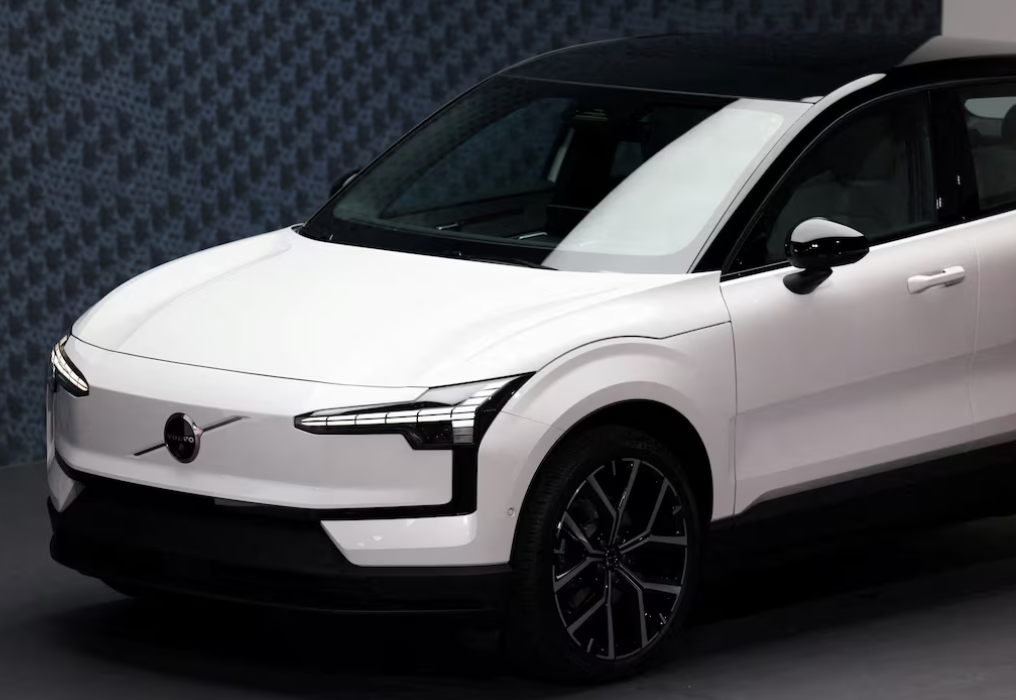
🔥 Volvo Cars recalls 40,000 EVs due to battery fire risk
- Volvo has announced a global recall of more than 40,000 EX30 electric SUVs because of potential battery overheating and fire hazard.
- Affected vehicles include both single-motor and twin-motor variants.
- Owners are being advised to limit battery charge to 70% until replacements are done.
- Estimated cost: ~$195 million for the recall itself — excluding labor, logistics, or longer-term brand impact.
- Impact: Share price fell ~4%, spotlighting safety as a critical EV business risk and a possible drag on adoption in safety-sensitive markets. (Reuters)
🚖 Uber invests in robotaxi charging hub infrastructure
- Uber announced a $100 million strategic investment to build charging hubs dedicated to robotaxi fleets (autonomous EV taxis).
- First phase will deploy in U.S. cities including Bay Area, Los Angeles, Dallas — with expansion planned globally.
- Partnerships include charging networks like EVgo; this aims to solve a major bottleneck in EV robotics deployment.
- This represents a next-gen charging infrastructure business model rather than consumer retail charging expansion. (Autoweek)
🚙 Maruti Suzuki (Suzuki) launches first EV with battery rental model
- India’s largest automaker (via Maruti Suzuki) introduced the eVITARA SUV, priced competitively (~$12,100).
- Crucially, it offers a battery rental scheme to reduce upfront cost barriers — a model gaining traction in emerging EV markets.
- The battery rental cost is structured per km, estimated to be roughly half the operating cost of equivalent ICE vehicles in India.
- Market context: EV share in India ~5% of total car sales but doubling YoY with support from domestic policy goals targeting 30% adoption by 2030. (Reuters)
🔋 Battery & Supply Chain Dynamics
🌍 Indonesia tightening control on critical nickel — supply chains affected
- Indonesia is cracking down on nickel mining and licensing, even as global demand and supply negotiations with the U.S. and China are evolving.
- While the country had dominated raw nickel supply (important for EV batteries), Chinese manufacturing shifts toward LFP chemistries reduce nickel demand.
- Policy volatility and regulatory enforcement may deter foreign investors and disrupt battery raw-material flows. (AP News)
🔄 EV battery lifecycle innovation: OMC Power + Honda partnership
- A new initiative to repurpose retired EV batteries into stationary energy storage solutions for homes and rooftop solar — part of broader second-life battery downstream markets.
- A sign of growing business ecosystems around battery reuse and sustainability, beyond initial vehicle use. (The Times of India)
📉 Market & Competitive Context
📊 Polestar doubles down on pure EV strategy amid financial strain
- Swedish EV brand Polestar (Geely-backed) reports significant financial losses (~$8 billion since inception) and slow demand, especially in the U.S.
- Rather than pivot to hybrids, Polestar is doubling its EV portfolio and securing external financing to fuel growth.
- Strategic risk: premium EV pricing + competition from lower-cost Chinese OEMs. (thescottishsun.co.uk)
📈 Startup / Small Business Momentum
- Indian EV ecosystem shows grassroots growth: reports highlight Battery Smart scaling in the EV services space, focusing on battery-swaps and last-mile electrification business models. (financialexpress.com)
📡 Macro EV Market Trends & Context
📈 Consumer sentiment hitting new highs
- According to the latest JD Power EVX study, EV owner satisfaction is at a record high, driven by advances in battery tech, vehicle performance, and charging experiences — a key signal for sustained long-term adoption. (wardsauto.com)
⚠️ Charger infrastructure growth still uneven
- Global charging build-out continues, but expansion rates vary regionally: Europe/EU are leading coverage, but structural gaps remain, especially in rural zones and emerging markets.
- Overall public charging points are rising sharply, with >30% annual increases in installed network capacity. (IEA)
📉 Broader industry pressure & strategy reassessment
- Recent industry analyses indicate stalled EV demand in some developed markets has led legacy automakers to reassess investments — even acknowledging $50 billion+ write-downs and strategic pivots toward hybrid/ICE and storage sectors. (tlimagazine.com)
🌐 Regional & Policy Headlines Still Shaping the Global EV Business
While not today’s headlines, these broader contexts influence the EV landscape:
- Canadian EV target policy likely scrapped, shifting toward fuel efficiency standards. (Reuters)
- Charging network alliances (e.g., IONNA in North America) aiming for tens of thousands of high-power charging points. (Wikipedia)
- Latest forecasts project exponential EV market growth through the 2030s, with multi-trillion-dollar market valuations. (altenergymag.com)
Summary – Key Themes Right Now
- Safety and quality issues (Volvo recall) are immediate disruptors.
- Infrastructure innovation expands beyond public chargers (e.g., robotaxi hubs).
- Affordability plays a role in emerging markets (battery leases).
- Supply chain geopolitics matter for critical minerals.
- Automakers face economic recalibration amid slower demand.
- EV satisfaction and battery reuse sectors signal future business growth.

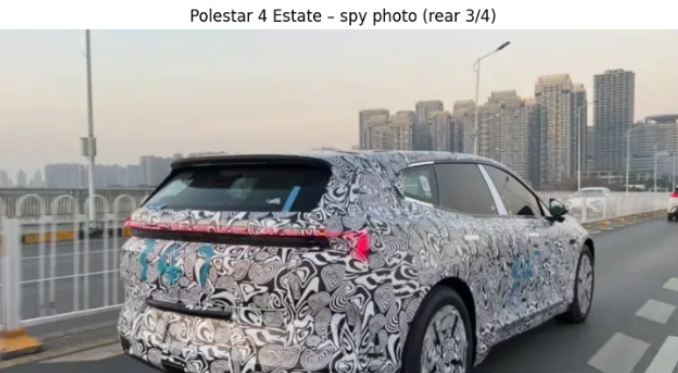
Polestar future models….
Here’s what’s hottest right now in EVs across Nordics, Europe, England, Asia, and the US—focused on new models, batteries, charging, and self-driving.
Here’s a fresh, up-to-date news and “hot takes” snapshot (Feb 2026) on the EV market, charging, infrastructure and industry shifts in the Nordics, EU, Asia, and US — covering market performance, strategic shifts, regulatory action, charging network moves, and emerging technologies.
🌍 Overall EV Industry Momentum & Market Trends
1) Electric vehicle registrations showed a mixed global performance
- Global EV registrations dipped slightly 3% year-on-year in January 2026 (~1.2M units), driven by slower sales in China and the U.S. amid shifts in subsidies and taxation. Europe still posted growth. (Reuters)
2) Market leadership reshuffles
- BYD overtook Tesla in global EV unit sales for 2025, with ~2.26 M EVs delivered vs Tesla’s ~1.64 M, illustrating how volume across price segments is becoming critical. (Discovery Alert)
3) Industry financial impact from EV strategy revision
- Major OEMs have taken ~$65 billion in write-downs as some reevaluate EV commitments in light of slower adoption and policy uncertainty — particularly in the U.S., where EV share projections have been cut sharply under changing regulatory environments. (Financial Times)
4) National EV support scales up in parts of Europe
- Spain announced a €700 M program to boost EV adoption and expand charging infrastructure in underserved regions — combining purchase incentives with charging rollout funding. (The Times of India)
🇳🇴 Nordics – EV Adoption & Charging Infrastructure
Nordic EV market nuance
- Nordic EV adoption remains high but dynamic: Denmark’s car market grew in early 2026 and saw continued electric demand, while Norway’s new registrations declined in Jan 2026 due to fiscal timing effects (rule changes impacting purchase behavior). (alternative-fuels-observatory.ec.europa.eu)
Regional strength
- Norway, Sweden, Denmark, and Finland remain among the fastest EV adopters globally, with high market shares connecting policy, incentives, and charging networks. (wri.org)
Charging market moves
- Virta’s acquisition of Swedish fleet platform Northe consolidates Nordic charging software and driver services, aiming to create the region’s largest integrated EV driver platform — reflecting consolidation and B2B network strategy. (EV Infrastructure News)
🇪🇺 EU – Regulation, Charging Rollout, and Industry Strategy
EU industrial policy tightening
- The European Commission is proposing a “70% local content rule” for EV manufacturers to qualify for subsidies, pushing more European battery and component sourcing — a strategic move to foster domestic EV supply chains and reduce dependence on imports. (Financial Times)
EV market growth dynamic
- Europe started 2026 with a ~24% increase in EV unit sales (January), supported by recently reactivated subsidies in core markets like Germany, France and the UK — though overall adoption remains uneven across member states. (Benchmark Mineral Intelligence)
Charging infrastructure expansion
- Global public charging points saw >30% growth in 2024, with Europe crossing 1 million public points — driven by national deployment and policy frameworks like the Alternative Fuels Infrastructure Regulation (AFIR) pushed by Brussels. (IEA)
🇨🇳 Asia – China, India and Regional Charging Expansion
China’s electric transition scale
- China leads EV adoption in absolute terms globally and continues dominating public charging deployment — roughly two-thirds of global chargers added recently. (IEA)
India’s charging network consolidation
- JBM Group signed an exclusivity deal to acquire Fortum India’s EV charging arm (GLIDA, ~850 chargers) — a sign that local players are scaling networks across cities and highways to support growing EV demand. (mint)
Regional export and assembly moves
- African markets like Nigeria and Kenya are assembling EV vans domestically from Chinese kits and pairing them with solar-oriented charging efforts — illustrating Chinese tech’s export influence and localized charging ecosystem formation. (AP News)
🇺🇸 United States – Policy Focus & Charging Transition
Policy & infrastructure strategy
- U.S. EV policymakers are examining ways to reinvigorate EV charging deployment, including revitalizing the Joint Office of Energy and Transportation (JOET) and tying public investment to affordability/price controls — reflecting a shift toward targeted, economically “meaningful” deployment in challenging areas. (energypolicy.columbia.edu)
Broader market slowdown
- The U.S. EV market has seen significant sales declines (noted in the global January 2026 drop), prompting adjustments in strategy by both automakers and policymakers. (Reuters)
🔌 Charging Market Dynamics & Emerging Sub-Segments
Global infrastructure market projection
- The EV charging station market is forecast to expand tremendously over coming decades — with some analyses suggesting growth from ~$64 billion in 2025 to a multitrillion-dollar market by 2050 as electrification scales and charging becomes core infrastructure. (GlobeNewswire)
Vehicle-to-Grid (V2G) and bi-directional momentum
- The V2G market is set to grow at ~18.5% CAGR through 2033, with investments in bidirectional chargers and grid integration reflecting demand for smart energy and grid services from EV fleets. (prnewswire.co.uk)
Emerging flexible charging solutions
- Growth in mobile energy storage charging vehicles (battery-equipped vans/trucks that can charge EVs off grid) is being tracked as a new niche — addressing charging deserts and emergency power use cases — though at slower rollout/higher cost than fixed sites. (intelmarketresearch.com)
📊 What This Means Today
Market:
- The EV transition is no longer “linear growth only” — regions diverge as incentives, policy, and economic context shift.
- China remains the largest single contributor to EV uptake and charging deployment, but Europe and the Nordics push policy and infrastructure scale, while the U.S. navigates slower demand and infrastructure strategy.
Charging:
- Rapid public charger growth continues, but quality (uptime, payment, interoperability) and next-gen technologies (V2G, bidirectional charging) are becoming strategic differentiators.
- Consolidation (platform M&A, network alliances) and flexible charging formats (mobile solutions) are emerging trends.
Technology & Strategy:
- Across regions, regulatory frameworks (EU local content rules, U.S. infrastructure strategy), incentives, and market competition (Chinese OEMs scaling volume) are reshaping where and how EVs and charging systems will expand through the rest of 2026 and into the late decade.
Here’s what’s hot right now (as of Feb 9, 2026) on EVs, batteries, and charging across the Nordics, Europe, Asia, and the US—focused on the stuff that’s actively changing markets and user experience.
The hottest global themes (the “why it matters” layer)
1) Charging is becoming regulated infrastructure, not a “nice-to-have”
- In European Union, the AFIR regime is pushing minimum corridor coverage, ad-hoc payment, and clearer price transparency—moving public charging closer to “fuel retail rules.” (ICCT)
- In the United States, public fast charging still expanded hard in 2025 even with a bumpier EV demand curve—~18,000 new DC fast ports added in 2025 per reporting, taking totals to 70,000+. (Axios)
2) Battery compliance is now a product feature
- The EU Battery Regulation (2023/1542) is forcing manufacturers to treat traceability + lifecycle data as “table stakes,” with battery passports becoming mandatory from Feb 18, 2027 (for EV and certain industrial batteries). (eur-lex.europa.eu)
- Net effect: expect more talk about carbon footprint declarations, origin of materials, repairability, and recycled content—not just kWh and 10–80%. (eur-lex.europa.eu)
3) Heavy-duty charging is entering the “megawatt era”
- MCS (Megawatt Charging System) is moving from lab/spec sheets into real-world pilots and endurance runs (1,000A-class and beyond, aimed at long-haul truck duty cycles). (Scania Corporate website)
Nordics (Norway/Sweden/Denmark/Finland): “EV normality” + heavy-duty acceleration
Norway: ICE collapse is no longer theoretical
- January 2026 registrations reportedly included only seven new petrol cars—a headline-level milestone showing how close Norway is to “endgame” for new ICE sales. (The Guardian)
Sweden: fleet electrification + charging funding (esp. heavy vehicles)
- Sweden hit ~15% EV share of the car fleet in 2025 (EAFO reporting), while electric heavy trucks grew strongly (still small absolute numbers). (alternative-fuels-observatory.ec.europa.eu)
- Sweden-specific incentive/infra notes tracked by EAFO include support programs like Ladda Bilen and new heavy-vehicle charging funding streams (depots/corridors/TEN-T oriented). (alternative-fuels-observatory.ec.europa.eu)
Denmark and Finland: MCS pilots are landing
- Public/early MCS activity in the Nordics is expanding (examples include Sweden/Denmark pilots and new Finland buildouts reported by industry sources). (Kempower)
Practical takeaway for Nordic drivers/fleets: the region is shifting from “build more chargers” to “build the right chargers”—reliability, ad-hoc payment, uptime, and heavy-duty corridor power.
Europe: AFIR enforcement + Plug&Charge readiness becomes a differentiator
AFIR is turning into “enforcement reality”
- The EU’s own Q&A clarifies expectations around payment cards for ad-hoc charging and consumer transparency. (Mobility and Transport)
- Market commentary is increasingly about how regulators will test and enforce these requirements in practice. (evcharging-infrastructure.com)
Plug&Charge roadmap is becoming more explicit
- EAFO notes ISO 15118 support requirements ramping over time (including ISO 15118-20 later), which matters for Plug&Charge and secure automated charging experiences. (alternative-fuels-observatory.ec.europa.eu)
Battery Passport is the big compliance clock
- Battery passports from Feb 18, 2027 are a concrete deadline that will affect OEMs and potentially what consumers can see (battery provenance, sustainability claims, etc.). (Baker McKenzie)
Practical takeaway in Europe: “best charging network” will increasingly mean compliant + easy to pay + transparent + interoperable, not just “most stalls.”
Asia: sodium-ion momentum + safety regulation tightening + demand/price dynamics
China: sodium-ion is back in the near-term product timeline
- Reporting on Feb 9, 2026 says BYD has developed sodium batteries with very high claimed cycle life, and that CATL + an automaker have unveiled a sodium-ion passenger vehicle targeted for mid-2026. (CnEVPost)
- Why this matters: sodium-ion can reduce dependence on certain materials and is attractive for cost-focused segments (tradeoffs vs energy density).
China battery safety regs are getting stricter (effective July 2026)
- Battery safety standards are set to tighten with more demanding tests aimed at thermal runaway/fire risk reduction. (Reuters)
China market pulse: demand + competition are shifting
- **Tesla China-made EV sales rose YoY in Jan 2026, while broader market growth slowed sharply vs 2025, per reporting. (Reuters)
- BYD’s Jan 2026 domestic sales reportedly fell sharply YoY amid subsidy and price-war dynamics, reinforcing the push for overseas growth. (Investors)
India: policy is pushing charger rollout economics
- India has reportedly cut benchmark prices for EV chargers to accelerate deployment (and reduce subsidy burden), while infrastructure gaps remain uneven by state. (The Economic Times)
Practical takeaway in Asia: watch (1) sodium-ion commercialization, (2) safety regulation (esp. thermal runaway tests), and (3) continued price pressure pushing faster tech cycles.
United States: NACS transition + infrastructure scale continues
NACS is still the biggest connector story
- Tesla continues positioning NACS as the default path, with broader network opening as automakers transition. (Tesla)
- Automaker “who’s switching when” remains a moving target, but 2025–2026 model-year strategies increasingly include native NACS ports or OEM-approved adapters (industry reporting). (MotorTrend)
Public fast-charging expansion stayed strong in 2025
- Reporting indicates major expansion in DC fast charging ports and improving reliability/standardization trends. (Axios)
- Separate industry reporting pegged 2025 at record fast-charging sessions and improved reliability. (paren.app)
Policy volatility remains part of the US EV equation
- Consumer-facing incentives and edge cases (like leasing structures) have been under active discussion/changes in 2025–2026 coverage—worth validating at purchase time. (Kiplinger)
Practical takeaway in the US: plan for connector transition complexity (NACS ↔ CCS via adapters) through at least the next couple model years, but the infrastructure base is still scaling.
Heavy-duty & freight: the “next wave” that will reshape corridors (EU + Nordics + global)
- **Mercedes-Benz Trucks ran a 2,400 km endurance test (Germany→Sweden) with megawatt charging/MCS in Jan 2026, highlighting that public/private truck-ready infrastructure is now being used in realistic operations. (Daimler Truck)
- **Scania frames MCS as up to ~1,000A (and evolving), meant to make long-haul electric operations viable. (Scania Corporate website)
Battery tech watchlist (near-term vs longer-term)
Near-term (shipping now / 2026–2027 programs)
- Sodium-ion: renewed push toward mainstream segments in China (claims + prototypes targeting mid-2026). (CnEVPost)
- Safety-first packs: more stringent regulatory tests (China July 2026) will likely influence pack design, thermal management, and validation. (Reuters)
- Battery passports / traceability: EU compliance clock changes procurement, documentation, and supplier selection. (Baker McKenzie)
Longer-term (premium-first, then down-market)
- Solid-state remains “close, but not mass” — a US program aims to integrate Factorial tech into a production-intent vehicle around 2027, per reporting. (Autoweek)
If you want, I can turn this into a weekly “Hot EV + Battery + Charging” briefing split by region (Nordics/Europe/Asia/US) with the 10 most important items, each with why-it-matters and who-it-impacts.
The Times of India
Below is a hot + latest (as of 1 Feb 2026) briefing on EVs, batteries, and charging across the Nordics, Europe, Asia, and the US—focused on what’s materially changing right now.
What’s hot globally right now
Charging infrastructure is the new bottleneck (and the new battleground)
- Public fast-charging rollout is lagging policy targets in parts of Europe/UK, with operators citing grid constraints, planning friction, and policy uncertainty—especially around rapid chargers. (Financial Times)
- “Battery-backed chargers” (onsite storage paired with DC fast charging) are being used to bypass grid upgrade delays and smooth peaks—showing up as a pragmatic, near-term fix for constrained sites. (EV Charging Europe)
Standards are diverging by region (but converging within North America)
- In the US, the shift toward NACS continues: automakers are moving to native NACS inlets and leaning on adapters for legacy vehicles (a big deal for customer experience and utilization of existing networks). (Toyota USA Newsroom)
- Meanwhile, tracker data indicates both NACS and CCS connector counts grew strongly over 2025, with CCS still adding a large absolute number of connectors—so the transition is not “overnight.” (EV Charging Stations With Tom Moloughney)
Battery tech headlines: faster charging + safer chemistries + solid-state hype moving closer
- A flurry of headlines are clustering around solid-state / semi-solid readiness claims and higher energy density announcements; one example is Geely talking up a production-ready solid-state roadmap. Treat timelines cautiously, but it’s clearly back in the center of OEM messaging. (TechRadar)
- Separately, materials/process innovations aimed at meaningfully faster charging (without destroying cycle life) are getting attention—often framed as enabling higher C-rate charging. (Forbes)
Nordics: adoption leadership + fresh policy levers
Norway: effectively “post-ICE” for new car sales
- Norway hit ~96% BEV share in 2025 and ~97.6% in December 2025 (with year-end pull-forward dynamics tied to tax changes). (Reuters)
Sweden: new EV support starts March 18, 2026
- Sweden launches Elbilspremien with 1,300 SEK/month for up to 36 months (total 46,800 SEK) plus a potential 18,000 SEK start supplement for the lowest-income households. (naturvardsverket.se)
Why it matters: it’s structured to reduce monthly cost (useful for private leasing affordability), not just a one-off purchase bonus.
Europe: EV sales momentum + industrial policy tightening
Sales and regulation
- In Europe, EV sales surged in 2025 and EVs overtook petrol in December (monthly share), signaling mainstream momentum—despite brand reshuffling and continued subsidy/policy debates. (Financial Times)
“Made-in-Europe” rules and procurement push
- The European Union is preparing rules that would push EU-made content requirements for certain public purchases of green tech (including batteries/EV supply chain components). This can affect pricing, sourcing, and which battery packs qualify for public tenders. (Reuters)
Infrastructure: data and targets are getting more formalized
- The European Alternative Fuels Observatory continues publishing updated charging/vehicle datapoints and policy tracking—useful for benchmarking Nordics vs. EU averages. (alternative-fuels-observatory.ec.europa.eu)
Asia: scale + rapid iteration (and exports shaping everyone else’s market)
China: pivot from price war to “high-tech” positioning
- Coverage points to China’s market shifting emphasis toward higher-end tech (fast charging, battery swapping, and next-gen chemistries), with big players scaling infrastructure and pack tech to support it. (EV Infrastructure News)
Global market pressure via low-cost models
- Multiple regions are seeing adoption acceleration partly driven by cheaper models—often from Chinese OEMs—expanding the addressable market beyond early adopters. (The Guardian)
US: fast-charging expansion + NACS rollout moves from “promise” to “construction”
Network growth
- Reporting indicates US fast-charging expansion had its strongest year yet, with buildout led largely by private networks (important context for utilization and pricing). (Yahoo Autos)
OEM + network execution examples
- Toyota says NACS access expands DC fast-charging availability for its customers (adapters first, native inlets on newer models). (Toyota USA Newsroom)
- EVgo is actively deploying NACS ports, highlighting how quickly the ecosystem is retooling at the station level. (InsideEVs)
Practical “watch list” for the next 30–90 days
- Chargepoint reliability + pricing (especially HPC corridors): uptime and transparent pricing will increasingly decide brand loyalty.
- Grid-constrained sites: battery-buffered charging hubs will spread where connection queues are long. (EV Charging Europe)
- Battery safety and recalls: any OEM guidance limiting max charge state is a serious signal to watch (even if incidents are rare). (The Sun)
- Policy changes: Sweden’s Elbilspremien and EU procurement content rules may shift demand and supply patterns quickly. (naturvardsverket.se)
The SunBelow is a hot + latest (as of 1 Feb 2026) briefing on EVs, batteries, and charging across the Nordics, Europe, Asia, and the US—focused on what’s materially changing right now.
What’s hot globally right now
Charging infrastructure is the new bottleneck (and the new battleground)
- Public fast-charging rollout is lagging policy targets in parts of Europe/UK, with operators citing grid constraints, planning friction, and policy uncertainty—especially around rapid chargers. (Financial Times)
- “Battery-backed chargers” (onsite storage paired with DC fast charging) are being used to bypass grid upgrade delays and smooth peaks—showing up as a pragmatic, near-term fix for constrained sites. (EV Charging Europe)
Standards are diverging by region (but converging within North America)
- In the US, the shift toward NACS continues: automakers are moving to native NACS inlets and leaning on adapters for legacy vehicles (a big deal for customer experience and utilization of existing networks). (Toyota USA Newsroom)
- Meanwhile, tracker data indicates both NACS and CCS connector counts grew strongly over 2025, with CCS still adding a large absolute number of connectors—so the transition is not “overnight.” (EV Charging Stations With Tom Moloughney)
Battery tech headlines: faster charging + safer chemistries + solid-state hype moving closer
- A flurry of headlines are clustering around solid-state / semi-solid readiness claims and higher energy density announcements; one example is Geely talking up a production-ready solid-state roadmap. Treat timelines cautiously, but it’s clearly back in the center of OEM messaging. (TechRadar)
- Separately, materials/process innovations aimed at meaningfully faster charging (without destroying cycle life) are getting attention—often framed as enabling higher C-rate charging. (Forbes)
Nordics: adoption leadership + fresh policy levers
Norway: effectively “post-ICE” for new car sales
- Norway hit ~96% BEV share in 2025 and ~97.6% in December 2025 (with year-end pull-forward dynamics tied to tax changes). (Reuters)
Sweden: new EV support starts March 18, 2026
- Sweden launches Elbilspremien with 1,300 SEK/month for up to 36 months (total 46,800 SEK) plus a potential 18,000 SEK start supplement for the lowest-income households. (naturvardsverket.se)
Why it matters: it’s structured to reduce monthly cost (useful for private leasing affordability), not just a one-off purchase bonus.
Europe: EV sales momentum + industrial policy tightening
Sales and regulation
- In Europe, EV sales surged in 2025 and EVs overtook petrol in December (monthly share), signaling mainstream momentum—despite brand reshuffling and continued subsidy/policy debates. (Financial Times)
“Made-in-Europe” rules and procurement push
- The European Union is preparing rules that would push EU-made content requirements for certain public purchases of green tech (including batteries/EV supply chain components). This can affect pricing, sourcing, and which battery packs qualify for public tenders. (Reuters)
Infrastructure: data and targets are getting more formalized
- The European Alternative Fuels Observatory continues publishing updated charging/vehicle datapoints and policy tracking—useful for benchmarking Nordics vs. EU averages. (alternative-fuels-observatory.ec.europa.eu)
Asia: scale + rapid iteration (and exports shaping everyone else’s market)
China: pivot from price war to “high-tech” positioning
- Coverage points to China’s market shifting emphasis toward higher-end tech (fast charging, battery swapping, and next-gen chemistries), with big players scaling infrastructure and pack tech to support it. (EV Infrastructure News)
Global market pressure via low-cost models
- Multiple regions are seeing adoption acceleration partly driven by cheaper models—often from Chinese OEMs—expanding the addressable market beyond early adopters. (The Guardian)
US: fast-charging expansion + NACS rollout moves from “promise” to “construction”
Network growth
- Reporting indicates US fast-charging expansion had its strongest year yet, with buildout led largely by private networks (important context for utilization and pricing). (Yahoo Autos)
OEM + network execution examples
- Toyota says NACS access expands DC fast-charging availability for its customers (adapters first, native inlets on newer models). (Toyota USA Newsroom)
- EVgo is actively deploying NACS ports, highlighting how quickly the ecosystem is retooling at the station level. (InsideEVs)
Practical “watch list” for the next 30–90 days
- Chargepoint reliability + pricing (especially HPC corridors): uptime and transparent pricing will increasingly decide brand loyalty.
- Grid-constrained sites: battery-buffered charging hubs will spread where connection queues are long. (EV Charging Europe)
- Battery safety and recalls: any OEM guidance limiting max charge state is a serious signal to watch (even if incidents are rare). (The Sun)
- Policy changes: Sweden’s Elbilspremien and EU procurement content rules may shift demand and supply patterns quickly. (naturvardsverket.se)
Hot EV headlines (as of 17 Jan 2026)
Nordics (Sweden, Norway, Denmark, Finland)
- Norway: EVs effectively “won” new-car sales in 2025 — Norway hit 95.9% BEV share of new registrations in 2025 (and ~98% in Dec), with a year-end rush ahead of VAT changes starting 1 Jan 2026. (Reuters)
- Sweden: targeted “Elbilspremien” starts applications 18 Mar 2026 — Naturvårdsverket confirms a new, income- and geography-targeted premium for BEVs; applications run 18 Mar 2026–30 Jun 2028. (Naturvårdsverket)
- Sweden: Volvo Cars pauses Novo Energy battery operations — Volvo halted activity at its Novo battery startup while it searches for a technology partner; remaining staff are laid off, underscoring pressure on European battery projects. (Reuters)
- Finland: “scrapping premium” returns for 2026–2027 — Finland is setting aside €20m for a scrappage-linked incentive scheme administered by Traficom. (Valtioneuvosto)
Europe (EU + UK)
- Germany: reported plan for new EV subsidy up to ~€6,000 — Reuters reports a German plan aimed at stimulating demand (portal expected later, with retroactive registrations from 1 Jan 2026 per the report). (Reuters)
- EU–China: tariffs vs “minimum price” undertakings — The European Commission issued conditions under which China-based EV makers may replace tariffs with minimum-price commitments, with investment in the EU also considered in evaluations. (Reuters)
- EU market context: BEVs ~16.9% share (Jan–Nov 2025) — ACEA’s latest published run-rate puts BEVs at 16.9% of EU registrations year-to-date through November 2025. (acea.auto)
- OEM performance snapshot: Porsche — Porsche said 22.2% of 2025 deliveries were fully electric (plus 12.1% PHEV), while China demand pressure remained a key headwind. (Reuters)
Asia (China + India highlights)
- China: EU trade channel stays central to 2026 export strategy — NIO publicly reiterated its intention to keep advancing in Europe as the EU’s “minimum price” pathway takes shape. (Reuters)
- China batteries: government flags “overcapacity” risk — Reuters reports China’s industry ministry urging battery manufacturers to optimize capacity and manage competition/supervision risks in EV + storage batteries. (Reuters)
- India: incentives increasingly tied to performance + charging buildout — Argus reports India revising EV incentives toward performance and allocating funding to fast-charging (especially for 2/3-wheelers). (argusmedia.com)
- India: PLI payouts support domestic EV ecosystem — Economic Times reports ~₹2,000 crore in incentives distributed to major players under the auto PLI scheme for FY25 performance. (The Economic Times)
United States
- Demand signal: global EV growth expected to slow in 2026 — Reuters cites Benchmark Mineral Intelligence: 2025 registrations up ~20% globally, but 2026 growth slowing amid policy/demand shifts; the same report notes a sharp North America drop around late-2025 policy changes. (Reuters)
- Charging funding: NEVI “Interim Final Guidance” is the operational baseline — FHWA’s updated NEVI guidance (effective Aug 2025) is what states and vendors are working from as projects resume/advance. (fhwa.dot.gov)
- On-the-ground charger buildout tracking — The US DOE’s Alternative Fuels Data Center publishes quarterly infrastructure trend reporting based on the Station Locator dataset. (afdc.energy.gov)
Battery & charging news (cross-regional “what matters”)
- Europe’s battery industrial policy stress-test is ongoing — Volvo pausing Novo is a concrete example of how partner availability, financing terms, and cost inflation can stall EU-based cell ambitions. (Reuters)
- China is managing both dominance and risk — Beijing is simultaneously benefiting from scale in batteries (EV + storage) and warning about overcapacity/competition as the sector matures. (Reuters)
- US charging: the rules and money flows matter as much as hardware — NEVI guidance and state-level execution remain the key swing factors for corridor reliability and uptime expectations. (fhwa.dot.gov)
- Europe HPC trend: megawatt-class hardware is moving from pilot to rollout — IONITY’s MCS procurement (Alpitronic HYC1000) is one of the clearer signals of 600kW–1MW-capable deployments scaling on major corridors. (Ionity)
What to watch next (practical “next milestones”)
- Sweden: Elbilspremien application opening 18 Mar 2026 and eligibility details/implementation updates. (Naturvårdsverket)
- Germany: confirmation of subsidy design + portal timing (Reuters notes May for applications). (Reuters)
- EU–China: which brands/models submit acceptable minimum-price undertakings, and what that does to EU retail pricing. (Reuters)
- US charging: how quickly states convert NEVI guidance into awards + operational stations (watch uptime/maintenance requirements). (fhwa.dot.gov)
Januari 3 – 2026
1) The global scoreboard
- BYD passed Tesla in 2025 battery-electric sales: BYD reported about 2.26M BEVs vs Tesla about 1.63M (Tesla down ~9% YoY). (The Guardian)
- BYD also reported ~4.6M total vehicles in 2025 (incl. PHEVs), highlighting how fast its scale is growing. (Bloomberg)
2) Nordics & Europe: the clearest signals right now
- Norway is basically “all-EV” now: 95.9% of new cars in 2025 were fully electric (almost 98% in Dec). Tesla led brand share, VW and Volvo followed; Chinese brands (incl. BYD) increased share. (Reuters)
- Tesla’s Europe is split: In Dec 2025, Tesla registrations surged in Norway but fell sharply in France (-66% YoY Dec) and Sweden (-71% YoY Dec); Reuters also notes Tesla’s Europe market share fell in 2025 vs 2024. (Reuters)
3) Charging: fewer apps, more rules, more reliability
- EU AFIR is now the big “forcing function”: from 2025, member states must enable ≥150 kW fast charging every 60 km along core TEN-T corridors (cars/vans). (Consilium)
- Spark Alliance (IONITY + Fastned + Electra + Atlante): aims to make ~1,700 stations / ~11,000 charge points accessible and payable across networks using your “home” charging app—less roaming pain. (IONITY)
- UK warning sign: major UK outlets reported a slowdown in charger rollout in 2025, raising concerns about meeting future demand. (The Guardian)
4) Policy & incentives: reshaping demand in 2025–2026
- US: Reuters reported federal EV tax credits expired Sept 30, 2025 (new $7,500 / used $4,000), and executives warned of a post-credit demand hit. (Reuters)
- EU: the Commission brought forward a review of the 2035 zero-tailpipe-CO₂ target (earlier review timing) amid automaker pressure—and later outlined proposals that would change how the 2035 endpoint works. (Reuters)
5) Batteries & tech: what to watch beyond “LFP vs NMC”
- Sodium-ion is getting louder: CATL messaging points toward wider sodium-ion adoption in 2026 across multiple segments; Reuters background also highlights CATL’s view of sodium-ion as strategically important. (CnEVPost)
- US battery supply shift: a Reuters Breakingviews piece argues the US is moving toward battery “autonomy” by 2026, with Korean makers (LGES/Samsung SDI/SK On) heavily invested and energy-storage demand helping absorb capacity. (Reuters)
6) Biggest brands: what’s “hot” for each
- Tesla: losing share in parts of Europe (notably Sweden/France), while still dominating in Norway; competition + lineup age are recurring themes. (Reuters)
- BYD: scale story + overseas expansion narrative continues; 2025 BEV crown is the headline. (The Guardian)
- Kia/Hyundai: Kia EV2 (Europe-focused B-segment EV SUV) has a world premiere scheduled Jan 9, 2026 at the Brussels Motor Show. (Kia Global Media Center)
- BMW: pushing Neue Klasse hard—BMW says the next iX3 brings up to 400 kW charging, ~10–80% in ~21 min, and is heading to CES 2026. (BMW Group PressClub)
- Volvo/Polestar: Polestar secured a term loan facility up to $600M from Geely to support liquidity. (Reuters)
December 30th – 2025
Global awards
- World Car Awards 2025 winners:
- World Car of the Year: Kia EV3
- World Electric Vehicle: Hyundai Inster / Casper Electric
- World Luxury Car: Volvo EX90
- World Performance Car: Porsche 911 Carrera GTS
- World Urban Car: BYD Seagull / Dolphin Mini
- World Car Design: Volkswagen ID. Buzz (worldcarawards.com)
Nordics (national “Car of the Year” awards)
- Norway – Car of the Year 2025:smart #5 (media.smart.com)
- Denmark – Car of the Year 2025: Renault 5 E-Tech + Nissan Micra (joint winners / closely related models; some headlines shorten this to “Renault 5”) (blog.bilbasen.dk)
- Finland – Car of the Year (Vuoden Auto Suomessa) 2026: Mercedes-Benz CLA (215 points) (auli.yhdistysavain.fi)
Europe
- European Car of the Year 2025: Renault 5 / Alpine A290 (caroftheyear.org)
UK (England)
- What Car? Car of the Year Awards 2025 (overall): Renault 5 52kWh Techno (What Car?)
- UK Car of the Year Awards 2025 (overall): Kia EV3 (kiapressoffice.com)
- Auto Express Car of the Year 2025 (overall): Škoda Elroq (Auto Express)
USA
- NACTOY 2025: Honda Civic Hybrid (Car), Ford Ranger (Truck), Volkswagen ID. Buzz (Utility) (Årets Bil, Lastbil och Elverktyg)
- MotorTrend Car of the Year 2025: Mercedes-Benz E-Class (MotorTrend)
Asia (major national awards)
- Japan Car of the Year 2025–2026: Subaru Forester (Forbes)
- Korea Car of the Year 2025: Kia EV3 (koreabizwire.com)
- India (ICOTY) 2025: Mahindra Thar Roxx (ICOTY (Indian Car Of The Year))
Nordics (EV-only): Elbilsveckan (SE-POD)
This is the Swedish year-end EV awards discussed in Elbilsveckan – Episode 161 (Dec 29, 2025) with Peter Esse (Elbilsveckan), Alrik Söderlind (Alriks Bilar), and Kristofer Rask (Allt om Elbil) (Elbilsveckan is run by Peter Esse & Christoffer Gullin, and Gullin is tied to Elbilsmagasinet). (Elbilsveckan)
Categories in the episode:
- Small EV of the Year
- Guilty Pleasure of the Year
- Best Used EV of the Year
- Surprise of the Year
- Disappointment of the Year
- EV of the Year (overall) (Elbilsveckan)
Winners :
- Small EV of the Year: Renault 5
- EV of the Year (overall): Mercedes-Benz CLA
- Other categories: left for listeners to hear in the episode (Elbilsveckan)
December 23d – 2025
Nordics (Sweden, Norway, Denmark, Finland)
- Norway is basically “all-EV” now: BEVs hit 97.6% of new registrations in November 2025, and Tesla also set a new annual single-brand sales record in Norway (driven by Model Y). (electrive.com)
- Sweden: grid build-out to enable more electrification: Svenska kraftnät launched four new transmission-line projects in the north (Norrbotten/Västerbotten) to strengthen the grid for new electricity production and major electrified industry loads—important for charging growth too. (svk.se)
- Volvo EX60 — what’s new right now
- Reveal date confirmed: Volvo will still reveal the EX60 on 21 January 2026 in a livestream from Stockholm. Volvo Cars+1
- Production timing + location: Production is set to start in the first half of 2026 at Volvo’s Torslanda (Gothenburg) plant. Volvo Cars+2Cision News+2
- Positioning: Volvo says it will have “faster charging” and “longer range than any Volvo car to date” (exact battery/kW figures not published yet). Volvo Cars+1
- Key tech debut: Volvo’s world-first “multi-adaptive safety belt” is slated to debut in the EX60 (uses sensor data + more load-limiter “profiles,” and supports OTA improvements). Volvo Cars+2The Verge+2
- Design/detail chatter: A design piece reported Volvo’s new typeface “Volvo Centum” is intended to debut with the XC60 refresh and EX60 (nice little UI/brand hint, but still not a spec sheet). Wallpaper*
- Sweden + Finland: TEN-T charging expansion backed by EU funds: 72 new recharging sites / 342 charge points (≥150 kW) along the TEN-T corridor, co-funded by €8m+. (CINEA)
- Denmark: fast-charger growth leadership (Europe): Denmark recorded the highest growth in public DC fast chargers in Europe in Q1 2025 (+104% YoY) (ICCT). (theicct.org)
- Sweden: new accessibility focus for chargepoints: a national standard for more accessible charging-station design is being highlighted by industry participants. (BraunAbility Europe)
Europe (EU + EFTA) — batteries, factories, policy pressure
- EU battery makers push “local content” rules: industry leaders argue Europe needs stronger local sourcing requirements to compete with Asia and reduce dependence on China. (Financial Times)
- Spain: big LFP manufacturing bet: Stellantis + CATL broke ground on a €4.1bn LFP gigafactory in Zaragoza, targeting operations by end-2026. (Automotive Logistics)
- Italy: battery project uncertainty: Stellantis-backed ACC is reported to be close to scrapping the Termoli gigafactory plan (decision expected late 2025/early 2026). (Reuters)
- EV sales momentum in Europe (Nov 2025): registrations rose for a fifth month; BEVs were about 21% of EU market share (and ~98% in Norway). (Reuters)
UK / England — charging rollout vs EV targets
- Public charger rollout slowed in 2025: reporting shows the UK added ~13,500 chargers in 2025 (slowest pace since 2022), with grid connection delays and policy/investment uncertainty among cited factors. (The Guardian)
- ZEV mandate review pulled forward: the UK government is starting its review of ZEV sales targets earlier than planned (pressure from automakers), while the 2035 phase-out remains stated policy. (electrive.com)
- Manufacturing transition: Nissan’s Sunderland plant is being positioned as “future-proofed” for EV production, even as broader transition targets get debated. (The Guardian)
Asia — fast-charging leaps + the battery supply machine
- China’s battery boom (storage + EV): Reuters highlights a surge tied to power-market reforms and global storage demand; China remains dominant in cell supply and exports. (Reuters)
- BYD’s ultra-fast charging narrative keeps growing: BYD’s megawatt-class / “flash charging” messaging (e.g., ~400 km in ~5 minutes on its platform) continues to drive headlines and competitive pressure on charging tech roadmaps. (BYD)
- Sodium-ion moving toward scale: CATL says its Naxtra represents mass-production progress for sodium-ion, aiming to reduce lithium dependence. (catl.com)
- Solid-state reality check (Japan): Toyota + Sumitomo reported progress on durable cathode materials, targeting material mass production around FY2028 and aiming for EV rollout ~2027–2028. (Reuters)
United States — NACS access + battery JV reshuffles
- More brands getting Tesla Supercharger access (NACS): Volkswagen owners in the US began getting Supercharger access (via adapter + some software updates), and Tesla continues opening its network through 2025 as automakers transition to NACS. (Car and Driver)
- Battery manufacturing chess move: LG Energy Solution is selling $2.86B of factory building/assets in Ohio to Honda’s US unit (restructuring the JV asset setup; not framed as exiting the JV). (Reuters)
One big cross-regional theme to watch
- Battery chemistries + commodities are reshuffling: Reuters notes global EV sales rising while battery metals (lithium/nickel/cobalt) stay under pressure from oversupply and the ongoing shift toward cheaper LFP and emerging alternatives like sodium-ion. (Reuters)
Here’s what’s newest + biggest in self-driving (robotaxis + “eyes-off” highway systems) in Europe and the US (as of Dec 27, 2025).
Europe - UK accelerates toward robotaxi pilots (2026): Uber and Lyft announced partnerships with Baidu (Apollo Go) to run UK robotaxi trials in 2026 (London focus), helped by the UK’s Automated Vehicles Act 2024 clarifying liability. (Reuters)
- UK government just opened a major “call for evidence” (Dec 4, 2025): This is a concrete step toward the secondary rules needed to authorize and regulate self-driving vehicles, with a passenger piloting scheme launching next spring and the stated goal of having the full framework in place from 2H 2027. (GOV.UK)
- Germany / EU: real public pilots are running (shuttles): The EU Urban Mobility Observatory highlights Germany’s KIRA project operating autonomous public-transport shuttles with passengers (Langen/Egelsbach, with expansion planned). (EU Urban Mobility Observatory)
- Level 3 “eyes-off” in Europe is still mostly Germany-led: Mercedes’ Drive Pilot has approval/rollout steps that allow use up to 95 km/h on German Autobahn (under specific conditions). This is still geographically and conditionally constrained—important, but not “general autonomy.” (Mercedes-Benz Group)
- United States
- Waymo had a high-profile “robotaxi stress test” failure mode (Dec 20 SF blackout): A major power outage knocked out traffic lights; Waymo vehicles stalled at intersections, and the event is now driving renewed scrutiny of remote assistance/teleoperation and emergency protocols by California regulators. (Reuters)
- Waymo recall + NHTSA pressure (school buses in Texas): Reuters reports a software recall affecting 3,000+ vehicles tied to behavior around stopped school buses, following a federal probe. (Reuters)
- Zoox recall (Dec 23): Amazon’s Zoox is recalling 332 vehicles after an ADS software issue that could cause vehicles to cross the center line or stop in oncoming paths near intersections (software update issued). (Reuters)
- Tesla under heavier “self-driving claims” scrutiny in California: Reuters reports a California regulator deferred a potential sales-suspension order, giving Tesla more time to address allegations of misleading marketing about self-driving capability. (Reuters)
- NHTSA’s big Tesla FSD probe continues: The U.S. regulator opened an investigation into ~2.88M Teslas over reports of traffic-law violations while using FSD (supervised). (Reuters)
- What this means (quickly)
- Europe’s near-term story: regulation + structured pilots (UK + German shuttle programs), with limited but real Level 3 availability in specific markets. (GOV.UK)
- US near-term story: scaling robotaxis is forcing “edge-case” accountability (blackouts, school buses, intersections) + more recalls and investigations as fleets grow. (Reuters)
Middle of December 2025
Big global themes right now
- Batteries are shifting “down-market”: more LFP + the first real sodium-ion ramp talk (cheaper, safer, less lithium dependence). CATL says its new sodium-ion brand Naxtra enters mass production in Dec 2025, while its Gen-2 Shenxing fast-charge pitch is “5 minutes for ~520 km” (claimed, version-dependent). (Reuters)
- Fast charging arms race: networks are building toward next-gen 800V / 600 kW capability in Europe (IONITY expansion plan includes up to 600 kW tech and big growth targets). (ionity.eu)
- Self-driving splits into two worlds:
- L2 “supervised” driver assist (you’re always responsible) is getting regulatory heat (Tesla naming/marketing scrutiny in California, plus proposed US legislation to constrain where Level 2+ systems can operate). (Reuters)
- L3 “conditional autonomy” is becoming more real in China with formal approvals. (Reuters)
Nordics
- Norway is basically the global EV endgame: November hit ~97.6% share of new registrations being fully electric (BEV). (electrive.com)
- Volvo pipeline: Volvo has said the EX60 will be revealed Jan 21, 2026 in Stockholm and built in Gothenburg (Torslanda), with production planned in H1 2026. (Cision News)
- Volvo EX90 tech step: Volvo has announced an upgraded EX90 with an 800-volt system and that 2025 EX90 owners get a one-time free core computer upgrade via workshop visit. (Volvo Cars)
- Northvolt fallout continues to reshape EU battery plans: Northvolt filed for bankruptcy in Sweden 12 March 2025. (northvolt.com) The EU is mobilising €8.5m (EGF) to support ~5,800 dismissed workers. (Employment, Social Affairs and Inclusion)
- Heavy transport electrification is accelerating in Scandinavia: Scania is pushing Megawatt Charging System (MCS)—talking up to 2× CCS2 and aiming for 80% <30 min (target) in its comms. (Scania Corporate website)
Europe
- Policy whiplash is the story: major reporting says the EU is considering softening the “100% zero-CO₂ by 2035” approach (e.g., a 90% reduction framework), which could keep some hybrids/range-extenders in play—still needs approvals. (Reuters)
- Market reality: EU BEV share was about 16.4% up to Oct 2025 YTD, while hybrids are the biggest slice. (acea.auto)
- Chinese brands keep expanding into Europe: Changan announced entry into Italy and Spain with EV SUVs and plans for broader rollout + dealer growth. (Reuters)
- Charging build-out is scaling: IONITY’s plan includes more sites and higher power hardware aimed at next-gen vehicles. (ionity.eu)
Asia
- China is the battery gravity well: SNE Research reports 933.5 GWh global EV battery usage (Jan–Oct 2025), +35.2% YoY—with CATL/BYD dominating share. (sneresearch.com)
- Sodium-ion goes from “lab idea” to “production story”: CATL’s Naxtra sodium-ion is positioned as LFP-class energy density and mass production from Dec 2025 (per Reuters). (Reuters)
- L3 autonomy is moving fastest in China: China approved its first batch of L3 vehicles (Changan + BAIC/Arcfox models). (Reuters)
- L3-ready product race: Reuters has previously reported Zeekr and Xpeng planning L3-capable/ready offerings. (Reuters)
United States
- EV market is choppy vs the rest of the world: one summary view says global EV sales grew in 2025, while North America lagged/declined amid incentive/policy shifts (interpret cautiously—different trackers vary). (Business Insider)
- NACS/Supercharger access is still a strategic moat: Tesla says its North American Supercharging network is opening to more automakers through 2025 as the industry transitions to NACS. (Tesla)
- Robotaxis: Waymo is the momentum leader: Financial Times reports Waymo exploring a large fundraise and expanding into more cities and internationally (including London/Tokyo pilots mentioned). (Financial Times)
- Tesla “self-driving” regulation pressure: Reuters reports California is pressing Tesla on Autopilot/FSD marketing terms (sales suspension order delayed while Tesla responds). (Reuters)
- US battery strategy: cheaper chemistries + new cathodes: GM/LG’s Ultium Cells plans LFP production lines in Tennessee (commercial production expected later), and they’ve also talked up an LMR prismatic cell concept for higher energy density at LFP-like cost. (news.gm.com)
Quick “watch list” for early 2026
- Volvo EX60 reveal (Jan 21, 2026) and what SPA3 + software stack really means in production cars. (Cision News)
- China L3 rollouts (what’s truly L3 vs geo-fenced demos). (Reuters)
- Sodium-ion reality check (which models actually ship with it at scale). (Reuters)
- 600 kW charging deployments and whether cars arrive that can exploit it broadly. (ionity.eu)
- Financial Times
- Reuters
- Reuters
- Reuters
- Reuters
- wsj.com
- The Guardian
- Business Insider
- Reuters
—————————————————————————————————————————–
Do you want EV news in your mailbox every week – SUBSCRIBE
—————————————————————————————————————————–
Globally, EVs are still growing fast, but the “hot” stuff now is value, compact crossovers and Chinese brands rather than just premium Teslas.
December 7th 2025

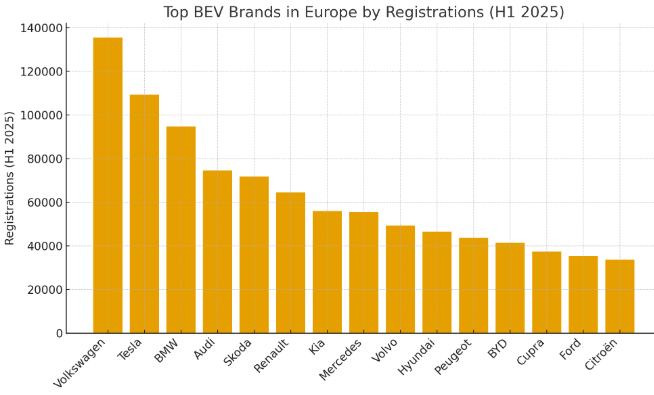
Chart – BEV brands Europe (H1 2025):
Based on JATO data for the first half of 2025, Volkswagen is now the largest BEV brand in Europe (~135k registrations), followed by Tesla (~109k), then BMW, Audi, Skoda, Renault, Kia, Mercedes, Volvo, Hyundai, Peugeot, BYD, Cupra, Ford and Citroën. best-selling-cars.com
Nordics
Market vibe:
Nordics are still EV-kingdom, but the mix is shifting away from just Tesla and towards Volvo, VW, Škoda and Chinese brands. Norway remains hyper-EV, while Sweden/Denmark/Finland grow more “normal” but steady. (electrive.com)
Hot themes:
- Big volumes, different tastes per country
- Norway: Tesla Model Y still a monster, topping July EV rankings. (electrive.com)
- Sweden: overall best-selling cars now Volvo XC60/XC40 and VW ID.7; Model Y has dropped down the list. (Focus2Move)
- New “Nordic-friendly” models
- VW ID.7 doing surprisingly well in Sweden (big cabin, comfy cruiser). (Focus2Move)
- Škoda Elroq and VW ID.4/ID.3 are among Europe’s top EVs overall and fit Nordic preferences (space + tow capability). (Eleport)
- Volvo EX30/EX40: extremely strong in Denmark/Sweden as “local” compact crossovers (sources roll into the Nordic growth stats). (theicct.org)
- Chinese brands quietly getting big
- BYD, Xpeng, Zeekr are growing fast in Europe and the Nordics are usually early adopters (BYD among Europe’s fastest-growing EV brands). (Autovista24)
If you’re thinking “what’s hot to buy/lease” in the Nordics right now:
Think ID.7, ID.4, EX30/EX40, Elroq, Model Y (still huge in Norway) plus BYD/Xpeng/Zeekr if you want to ride the Chinese wave.
Europe (outside the Nordics)
Market vibe:
Europe was a bit wobbly in 2024 but is back to strong EV growth in 2025:
- >2 million EVs Jan–Oct 2025, up 26% YoY. (electrive.com)
- EVs around 16–17% market share, even overtaking ICE in some months. (arenaev.com)
What’s hot right now
1. Top-selling models
From Jan–Oct 2025, the top EVs in Europe are: (Eleport)
- Tesla Model Y – still the benchmark crossover
- Škoda Elroq – surprise hit, very strong start
- Renault 5 / Alpine A290 – “future-retro” small EV, big buzz
- VW ID.4
- VW ID.3
So the “it-zone” is clearly C-segment crossovers & hatchbacks with decent price, not luxury stuff.
2. Tesla is hot and under pressure
- Model Y & 3 still #1 and #2 globally in BEV sales. (Autovista24)
- But in Europe, Tesla’s market share and image have taken a hit; registrations are down ~30% and political backlash against Musk is real in some countries. (WIRED)
- Tesla just launched a cheaper Model 3 Standard in Europe (from ~€38k in Germany) to fight demand softness and Chinese competition. (The Guardian)
3. Chinese “value EVs”
- Brands like BYD, MG, Xpeng, Zeekr are growing insanely fast; BYD’s European EV sales are up 300%+ YoY and it’s among the fastest-growing EV brands. (Autovista24)
- MG4 and BYD Dolphin undercut European C-segment EVs by ~12–13% on price, which is exactly where demand is hot. (assets.kpmg.com)
- New arrivals Zeekr (launched in Germany with three models) and Changan’s Avatr/Nevo will expand aggressively over the next 1–2 years, often with local EU factories to dodge tariffs. (Reuters)
4. PHEV comeback
Because of tariffs and cost pressure, many Chinese brands are now pushing plug-in hybrids hard in Europe, with PHEV registrations up almost 60% YoY and BYD already a top PHEV brand here. (best-selling-cars.com)
Asia (mainly China + neighbours)
Market vibe:
Asia = China first, then everyone else. China is now the EV superpower.
1. China is on another planet
- June 2025: EVs (BEV+PHEV) were 53% of all car sales in China. (CleanTechnica)
- BYD is the world’s largest EV maker with almost 20% global EV market share in 2025 YTD. (visualcapitalist.com)
- Best-selling BEVs in China H1 2025 include:
- Geely Geome Xingyuan (#1 BEV)
- BYD Seagull (#2, ~5% share)
- Tesla Model Y (top 3). (Autovista24)
So what’s “hot” there?
- Super-cheap small EVs like the BYD Seagull
- Compact sedans/crossovers like Qin Plus, Geely Xingyuan, BYD Song. (CleanTechnica)
2. Chinese export machine
- Between Jan–May 2025, BYD exported >210,000 EVs, with Asia 36% and Europe 27% of those exports; top export models include Song Plus, Seal, Dolphin, Atto 3. (DDong Automobile)
- Chinese brands are adding new EV models at insane speed (BYD alone got approval for 38 models recently). (Rest of World)
- Policy has shifted from raw subsidies to strategic pressure: dual-credit policy + targeted incentives for trading ICE in for an EV. (BCG Global)
3. Rest of Asia
- Korea: Hyundai Ioniq 5/6 and Kia EV6/EV9 dominate, with exports to Europe/US.
- Japan & much of SE Asia: still more hybrid/ICE-heavy, but Chinese EVs (especially BYD) are surging; SE Asia is a big target for Chinese exporters (and also a dumping ground for ICE cars that China can’t sell at home). (Financial Times)
In short: in Asia, “hot” = cheap Chinese EVs and BYD/Geely dominance, plus a parallel high-tech track from Hyundai/Kia.
USA
Market vibe:
Despite media noise, US EV demand is at record levels:
- >1.2 million EVs sold in the first three quarters of 2025, the highest ever.
- EV share just under 12% of new light-duty vehicles in Q3 2025. (theicct.org)
At the same time, some US automakers are nervously slowing EV investment and leaning back toward hybrids, even though the market is still growing.
What’s hot in the US
1. Core volume models
Top-selling EVs (Q2 2025) are: (CleanTechnica)
- Tesla Model Y – still the US EV king
- Tesla Model 3
- Chevy Equinox EV (big new player in the “affordable crossover” space)
- Hyundai IONIQ 5
- Ford Mustang Mach-E
More than 100 EV models are now on sale in the US; Tesla’s share has dropped from ~60% in 2020 to ~38% in 2024 because of this competition. (IEA)
2. Trucks & lifestyle EVs
- Ford F-150 Lightning, Rivian R1T/R1S, and Chevy Silverado EV are important but still niche vs crossovers.
- Tax credits (IRA) + state ZEV mandates keep the market moving, even while some brands publicly talk about “slowing EV plans.”
So in the US, “hot” really means mid-priced crossovers with federal tax credit eligibility, plus lifestyle pickups for early adopters.
Super-short summary for you
- Nordics: Still EV heaven. Hot = Volvo (EX30/EX40), VW ID.7/ID.4, Škoda Elroq, Model Y in Norway, plus rising BYD/Xpeng/Zeekr.
- Europe: Strong 2025 rebound. Hot = compact crossovers and hatchbacks (Model Y, Elroq, Renault 5, ID.4/ID.3) and aggressively priced Chinese EVs + PHEVs.
- Asia: China rules. Hot = BYD & Geely small/cheap EVs, 50%+ EV share at home, and massive export push (Seal, Dolphin, MG4, Atto 3, etc.).
- USA: Record sales, ~12% share. Hot = Model Y/3, Chevy Equinox EV, Ioniq 5, Mustang Mach-E, plus tax-credit-friendly crossovers and some pickup EVs.
If you want, next step I can:
- Build a matrix of “hot models by region” (WLTP/range, charge rate, 0–100, price band),
- Or zoom in just on “what’s hot for Sweden right now” for your leasing/website use.
Here’s a fast region-by-region snapshot (Nordics → Europe → Asia → USA), focused on what’s actually hot right now (late 2025).
Here’s a quick “world tour” of the hottest BEV/PHEV news right now (late Nov 2025), split by region.
Nordic countries
1. Nordics still the global EV benchmark (and getting more BEV-heavy)
- In Norway, over 96% of new car sales H1 2025 were plug-ins: ~93.7% BEVs and 2.4% PHEVs.(Nordea)
- From April 2025 Norway raised taxes on ICE cars and PHEVs, specifically to push the BEV share even higher toward the goal of 100% zero-emission sales by end of 2025.(IEA)
- Across Europe, the Nordics (Norway, Sweden, Denmark, Finland, plus Iceland) clearly lead: in 2024 electric powertrains were already >50% of new car registrations in these countries.(eea.europa.eu)
2. PHEVs are fading in some Nordics
- In Denmark, EVs were 66% of new car registrations Jan–May 2025, with 63% BEV and just 3% PHEV. BEV registrations jumped 55% vs 2024, while PHEVs fell 34% – a clear policy-driven shift toward full BEVs.(theicct.org)
3. “EV-ready” index puts Nordics at the very top
- A 2025 EV Readiness report ranks Norway, Denmark, Sweden and Finland, plus the Netherlands, as the most EV-ready markets in the world – based on high BEV shares, dense public charging, and strong policy frameworks.(EVBoosters)
Nordics:
- BEVs absolutely dominate new sales.
- Policy is now actively penalising PHEVs and ICE rather than just rewarding BEVs.
Rest of Europe
1. EU 2035 ban on new ICE cars is being re-opened
- EU leaders are now considering softening the 2035 ban on new petrol/diesel car sales, driven by slower EV uptake, economic worries and industry pressure. Proposals include allowing certain low-emission hybrids and synthetic-fuel ICEs beyond 2035.(The Verge)
- EV-focused groups warn this could undercut climate goals and make it easier for Chinese brands to gain share if Europe dithers on full electrification.(The Verge)
2. Chinese brands are winning Europe’s new “PHEV war”
- Chinese OEMs (BYD, Chery/Jaecoo, etc.) are gaining fast in the European PHEV segment with cheaper, longer-range plug-in hybrids, while many European legacies use PHEVs to keep combustion alive a bit longer.(Financial Times)
- PHEV sales in Europe surged ~32% in the first 9 months of 2025 to almost 920,000 units, even though the overall PHEV market share slipped from 9% to 7% between 2021 and 2024 as BEVs grew.(Financial Times)
3. North–South divide getting sharper
- PwC’s 2025 EV readiness index shows North-west Europe (Nordics + NL) racing ahead, while Southern and Eastern Europe lag on both charging infrastructure and BEV/PHEV shares.(EVBoosters)
- Many EU countries are tweaking incentives and road taxes – e.g. in the Netherlands, BEVs and PHEVs pay reduced motor-vehicle tax in 2025, but rates ramp up towards 2030, shifting from pure subsidy regime to “normalised” taxation.(alternative-fuels-observatory.ec.europa.eu)
TL;DR Europe:
- Policy debate: stick to pure BEV 2035 target vs. keep hybrids alive.
- Chinese brands are strong in PHEVs, especially as some EU makers are late with compelling BEVs in certain segments.
Asia
China
1. BEVs retake the lead from PHEVs in growth
- China just hit a new record: ~8.33 million BEV shipments and 4.61 million PHEVs this year so far, with BEVs now the main driver of electrification.(Automobility)
- Recent data shows a “two-speed” market: BEV sales up about 20% year-on-year, PHEV sales down ~10% YoY, and BEVs now 36% of the total Chinese car market in October.(CleanTechnica)
- Earlier (2021–24), PHEV share in China rose from 3% to 19% of new car sales, but 2025 is the first year where BEV share starts growing again relative to PHEVs, helped by better charging and narrowing BEV price premiums.(theicct.org)
TL;DR China: big PHEV wave 2021–24, but BEVs are clearly back on top this year.
India
2. India is going hard on infrastructure and local batteries
- The government has offered extra incentives to states to accelerate a nationwide public charging network, specifically to boost EV adoption.(allindiaev.com)
- Policy moves include removing import duties on key EV battery components and a wider incentive scheme worth about 109 billion rupees (~$1.3 bn) to support EV adoption.(mobec.io)
TL;DR India: EV share is still modest versus China/Europe, but policy is strongly pro-EV, focused on batteries + charging rather than just car purchase subsidies.
Japan & South Korea
3. Japan Mobility Show: hybrids still king
- At the 2025 Japan Mobility Show, the number of BEV models has jumped from ~15 (2019) to nearly 80, but only around 16 are from Japanese brands – the rest are foreign. Japanese OEMs still emphasise hybrids and plug-in hybrids over pure BEVs.(just-auto.com)
4. South Korea: high BEV sales + more subsidies coming
- South Korea’s domestic BEV sales hit an all-time high in September 2025, though conventional hybrids still outsell BEVs in volume.(argusmedia.com)
- To keep momentum and offset US tariffs, the government plans to boost EV subsidies by ~20% in 2026, taking the pot to 936 bn won (~$660 m) and adding more financing support for the auto supply chain.(Reuters)
Asia:
- China: BEVs accelerating again; PHEVs still big but losing share.
- India: policy push for charging + local battery production.
- Japan: still “hybrids first”.
- Korea: strong BEV growth plus fresh subsidy money.
United States
1. Federal EV tax credits just expired – big potential shock
- As of 30 Sept 2025, the main US federal tax credits for new, used and leased EVs (sections 30D, 25E, 45W under IRA) have expired early, cut off by a July 4 budget deal – they were originally supposed to run to 2032.(Plug In America)
- A separate budget reconciliation bill also aims to scrap remaining EV uptake incentives and add new EV-specific taxes to raise highway funds.(EV Infrastructure News)
- Industry studies suggest EV registrations could drop by ~27% without those tax credits, and automakers already warn about a potential “EV sales cliff”.(Reuters)
2. Hybrids (including PHEVs) are booming, led by Toyota
- Toyota is investing $14 bn in a battery plant in North Carolina to ramp up batteries mainly for hybrids and PHEVs (and some BEVs), part of a larger $24 bn+ US investment plan.(Wall Street Journal)
- Around half of Toyota’s US sales are now hybrids/EVs; the Camry and Sienna are hybrid-only and the RAV4 goes fully hybrid next year. Toyota is openly betting that hybrids and PHEVs will suit US consumers better than pure BEVs in the near term.(Wall Street Journal)
TL;DR US:
- Policy shock: federal EV purchase credits are gone, which may slow BEV uptake.
- Market is pivoting hard towards hybrids/PHEVs, even as some BEV-only players push on.
Global signals for BEVs vs PHEVs
1. Growth still strong, but slower and more uneven
- About 17.3 million electric cars were built in 2024, up ~25% vs 2023, with China accounting for >70% of global production.(IEA)
- In H1 2025, BEVs were about 65% of global plug-in sales, with PHEV vs BEV mix shifting by region (PHEVs up in China earlier, down in Europe; US shares small but growing).(theicct.org)
2. Charging infrastructure is both a success and a bottleneck
- Public charging points have more than doubled since 2022 to >5 million worldwide, but growth is starting to lag behind earlier EV forecasts.(IEA)
- A recent S&P analysis cut the 2030 forecast for BEV stock by ~18% and PHEV stock by ~6.5% versus last year’s expectations, citing slower infrastructure rollout and policy uncertainty.(S&P Global)
If you want, next step we can zoom in on specific models or brands (e.g. BYD vs VW in Europe, Kia/Hyundai vs Tesla in the Nordics, Toyota’s US PHEVs, etc.) or focus only on one region for a deeper dive.
Here’s a region-by-region snapshot of the most interesting EV news for November 2025
We’ve focused on things that matter for market share, pricing, and future models.

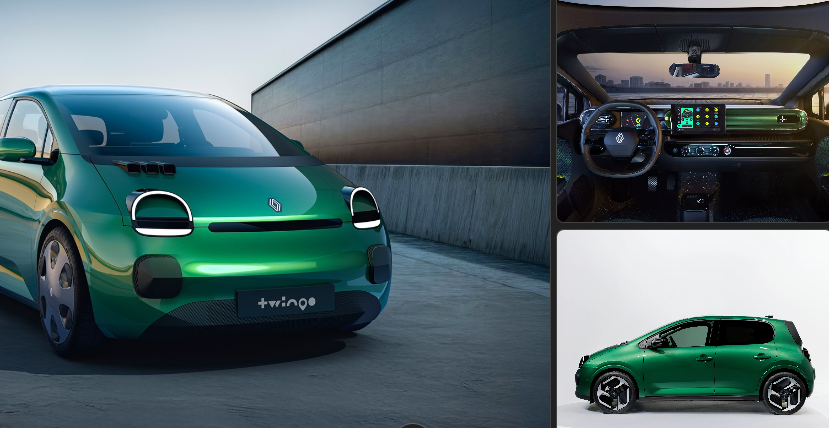
- Wall Street Journal
- New York Post
- EVBoosters
- Reuters
- The Guardian
- Reuters
- eea.europa.eu
- EVBoosters
- EVwire
- Reuters
🇳🇴🇸🇪🇩🇰🇫🇮 Nordics / Northern Europe
- Nordics crowned “most EV-ready” in Europe (PwC / EV Readiness Index 2025)
- New eReadiness 2025 report ranks Norway, Denmark, Sweden, Finland + the Netherlands as the most EV-ready countries in the world, combining:
- Very high EV sales share
- Dense public-charging coverage
- Strong, stable policy frameworks (EVBoosters)
- Implication for you (Sweden): Nordics are still benchmark region for infrastructure build-out and policy – good context when you benchmark prices, charging, and TCO vs rest of EU.
- New eReadiness 2025 report ranks Norway, Denmark, Sweden, Finland + the Netherlands as the most EV-ready countries in the world, combining:
- Nordic spotlight from ICCT (a bit earlier but heavily cited in November)
- ICCT “Market Spotlight” on Denmark, Sweden, Finland highlights them as Europe’s EV market leaders, with very high BEV share of new registrations and fast charging-network expansion. (Internationella rådet för ren transport)
🇪🇺 Europe (including broader EU + UK)
- Global EV sales up, Europe still strong – October data
- Research firm Rho Motion: global EV (BEV+PHEV) sales +23% in October 2025 y/y.
- Europe led regional growth, with strong demand in Germany, France, UK; EU also approved more battery projects. (Reuters)
- New data: BEVs now ~13.6% of all new EU cars; PHEVs 7.3%
- European Environment Agency indicator updated in November 2025 shows:
- 2024 registrations in EU: 13.6% BEV, 7.3% PHEV of all new cars.
- Number of new electric cars went from ~600 in 2010 to 2.4 million in 2023. (eea.europa.eu)
- European Environment Agency indicator updated in November 2025 shows:
- ACEA says 2030–2035 CO₂ targets for cars/vans “not achievable” on current path
- European carmakers’ association ACEA warns current policies/market conditions mean 2030–2035 CO₂ targets for cars & vans are at risk.
- Notes that BEVs were 16.1% of new registrations in September 2025 YTD; wants a “smarter regulatory path” and specific approach for vans. (ACEA)
- This matters for you: could impact future incentives, taxes, and company car rules that drive EV leasing offers in EU/Nordics.
- Renault revives Twingo as cheap city EV (sub-€20k)
- Renault unveiled a new electric Twingo (city car) to boost EV sales.
- Launch: early 2026, price under €20,000, using LFP battery from CATL; built in Slovenia.
- Dacia version expected < €18,000. (Reuters)
- This fits your interest in affordable EVs and small-car leasing/TCO in EU cities.
- China’s brands push harder into Europe using UK as gateway
- Guardian piece (7 Nov 2025) describes Chinese manufacturers racing to dominate European roads, using the UK as a key entry point and leveraging lower costs. (The Guardian)
- Very relevant for your “Chinese/Korean EV invasion” angle and future pricing pressure on VW/Volvo/BMW etc.
🌏 Asia (China, wider Asia)
- China & Asia still drive global growth – H1 2025 reports referenced in Nov
- EV Wire / EV Boosters:
- Global BEV sales H1 2025: 5.93 million (+29.1% y/y).
- Europe: 1.19 million EVs (+24.9%), 17.5% market share.
- China still holds the largest share; Asia overall is the main growth engine. (EVBoosters)
- EV Wire / EV Boosters:
- “Asia’s Electric Vehicle Revolution” – policy + industry push
- Overview article (not strictly November, but cited in current discussions) summarises how China, Japan, South Korea have aggressive EV policies, industrial strategies, and charging rollouts to support domestic OEMs and battery manufacturers. (asiangeo.com)
- This underpins why Chinese brands can undercut on price in Europe/Nordics.
(Most strictly date-stamped “Asia only” EV news in early November is embedded in global sales pieces rather than standalone stories.)
🇺🇸 United States
- U.S. vehicle sales fall as EV subsidies expire (Reuters, 4 Nov 2025)
- U.S. light-vehicle sales dropped in October as federal EV subsidies expired, reducing demand for BEVs.
- Tariffs and a softer labour market could further limit EV recovery in 2025. (Reuters)
- EV market share slipping slightly but still higher than 2023
- Recent U.S. data: BEV share ~7.4% of new car sales in Q2 2025, slightly down from 8.0% a year earlier, and essentially flat vs Q1 2025. (CarEdge)
- EV sales down, interest not dead (J.D. Power, 7 Nov 2025)
- J.D. Power: EV sales are under pressure in the U.S., but consumer interest is still growing, especially among existing EV lessees coming back into the market. (J.D. Power)
- Toyota goes big on U.S. batteries – but doubles down on hybrids
- Toyota announces a $14 billion battery plant in North Carolina, its largest U.S. battery investment.
- Batteries will support both EVs and hybrids, aligning with Toyota’s strategy to push hybrids (including PHEVs) as a more realistic mass solution vs pure BEVs in the near term. (Wall Street Journal)
- Tesla launches $60/day rental program as U.S. sales slump
- With U.S. EV sales down and the federal $7,500 credit gone, Tesla is piloting short-term rentals (~$60/day in California) including free Supercharging + FSD (Supervised) to move inventory and convert renters to buyers. (New York Post)
- Signals a more creative sales model and pressure on margins.
🌍 Global cross-region story (touches EU/Asia/US)
- Global EV sales booming, North America lagging
- Carscoops summary (Nov 2025): global EV and PHEV sales remain strong and are expected to stay high in China and Europe, while North America is the outlier with a clear slowdown. (Carscoops)
9th of November 2025
Here’s a detailed update on the EV-landscape, covering the upcoming Volvo EX60, the situation in Germany, and key developments in Asia (China, Korea, Japan).
1. Volvo EX60


Key points
- Volvo has announced the EX60 as its next-generation mid-sized electric SUV, positioned to sit beneath the current large EVs and above smaller models. (TopElectricSUV)
- It will be the first vehicle built on Volvo’s new “SPA3” architecture, purpose-designed for EVs (rather than adapted ICE platforms). (TopElectricSUV)
- Some of the technical/spec highlights announced or reported:
- 800 V architecture for faster charging. (What Car?)
- A potential range around ~300-350 miles (≈480-560 km) according to EPA/estimates. (TopElectricSUV)
- Up to ~400 kW system power (≈536 hp) for performance variants. (TopElectricSUV)
- Reduced cost/cost-efficiency focus: the car is intended to be priced “like a plug-in hybrid” (rather than ultra-premium EV) while improving margins. (motorillustrated.com)
- Manufacturing innovations: cell-to-body (CTB) battery integration, megacasting of large body components to reduce complexity and cost. (TopElectricSUV)
Timing & markets
- The global debut is scheduled for 21 January 2026. (TopElectricSUV)
- Production should start during H1 2026 with roll-out following; U.S. market among early ones. (TopElectricSUV)
- Volvo is offering incentives to smooth adoption: e.g., 1-year free home charging in some markets ahead of the launch. (Yahoo Autos)
Implications
- For you (given your interest in property/EV integration): the EX60’s faster charging and home-charger incentive could make it an interesting option near or post-2026 for integration into your home setup (heat-pump, PV, smart charging etc.).
- From a market-perspective: Volvo is signalling that EVs must become cost-competitive with internal-combustion or PHEV models, not only technologically superior, which is an important shift.
2. Germany / European market situation
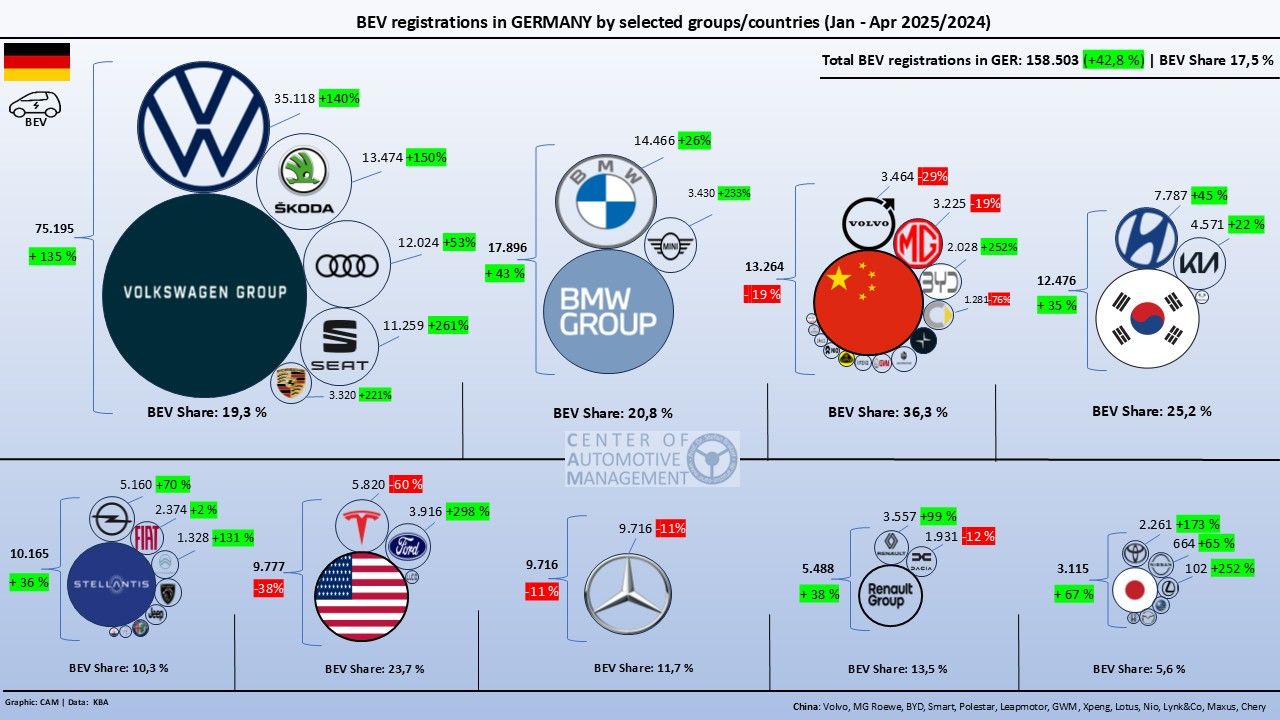

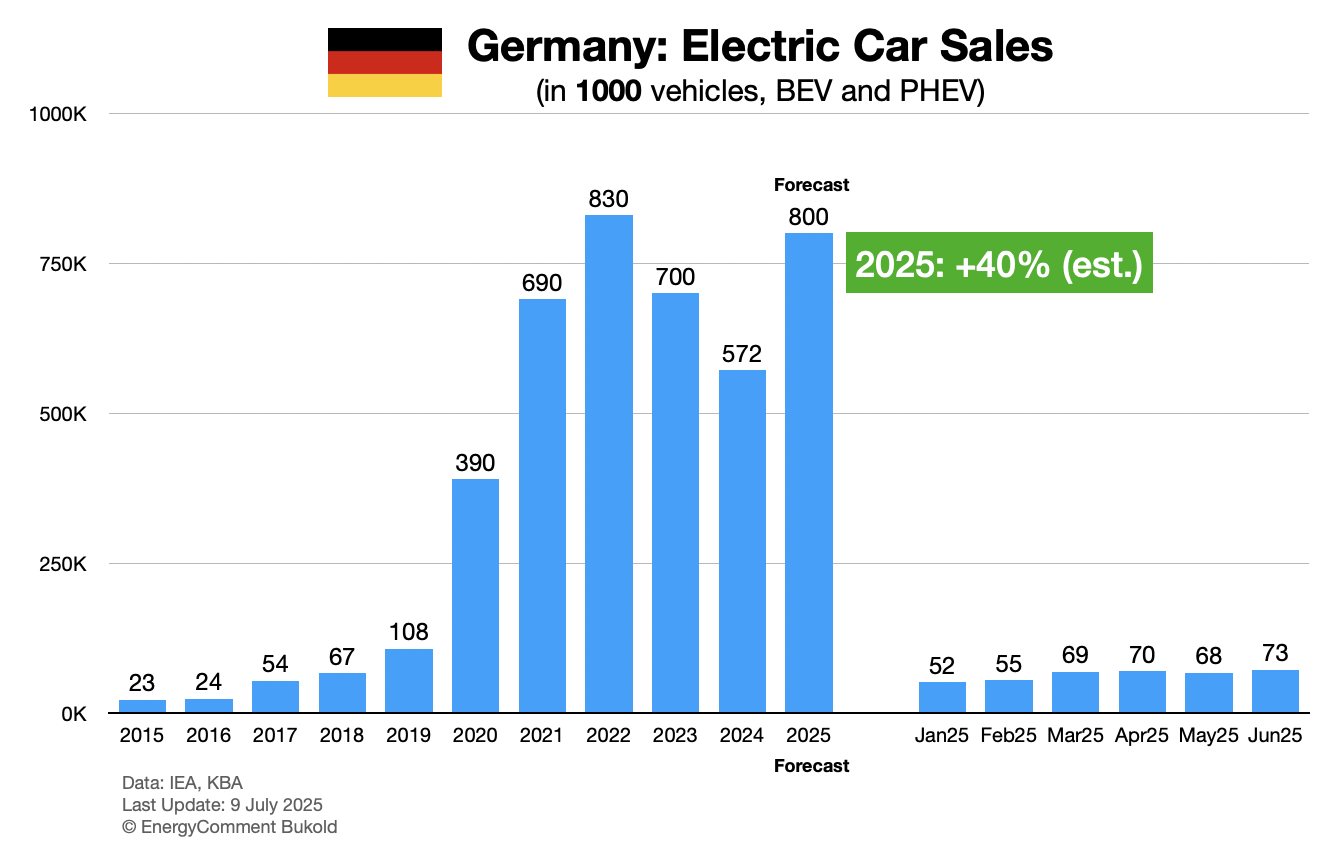


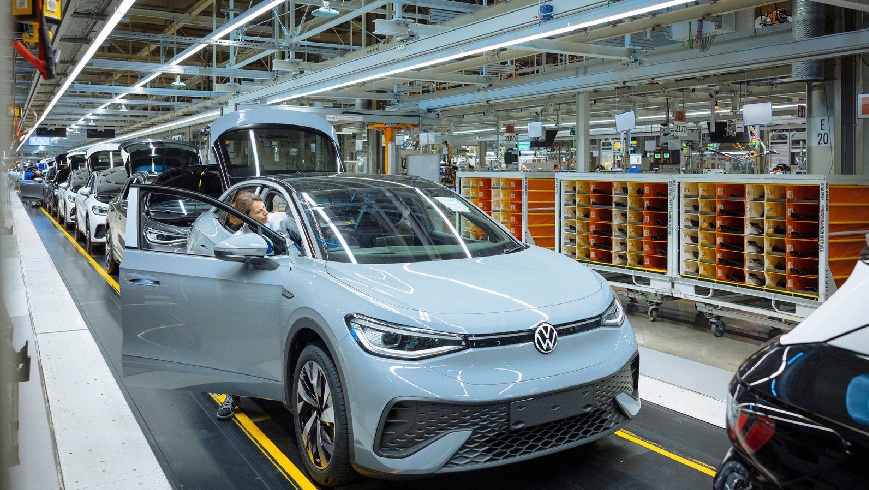
Market trends and developments
- Germany’s EV market (both BEV and PHEV) continues to grow: In September 2025, plug-in models had a 31.1 % share of new registrations in Germany, with volumes up 48.1 % year-on-year. (Autovista24)
- For the first nine months of 2025, BEVs accounted for 18.1 % of new registrations in Germany—slightly above the EU average. (english.news.cn)
Challenges & competitive shifts
- Despite growth in the EV segment, individual brands are facing disruption: Tesla saw its German sales more than halve in October 2025 compared with the same month a year earlier. (Reuters)
- Legacy automakers are under pressure: e.g., Volkswagen Group is pausing production at two German plants due to weaker than expected EV demand. (The Guardian)
- Industrial & structural implications: The German automaking ecosystem is noting that EVs, while growing, involve fewer labour steps and lower complexity potentially affecting jobs and value-chain contributions. (euronews)
Opportunities and infrastructure
- New services and business models: For example, Octopus Energy launched a bundled EV-leasing + charger + tariff product in Germany, signalling growth of holistic solutions to complement EV uptake. (EV Infrastructure News)
Why this matters for Sweden / you
- For Scandinavia (incl. Sweden), developments in Germany are indicative of broader European trends: pricing pressure, demand shifts, infrastructure bundling—which are all relevant for EV-integration at home (home charger, grid load, etc.).
- If you are considering a European-market EV (for your property/EV setup), keeping an eye on German/European infrastructure advances and incentives is smart.
3. Asia (China, Korea, Japan)


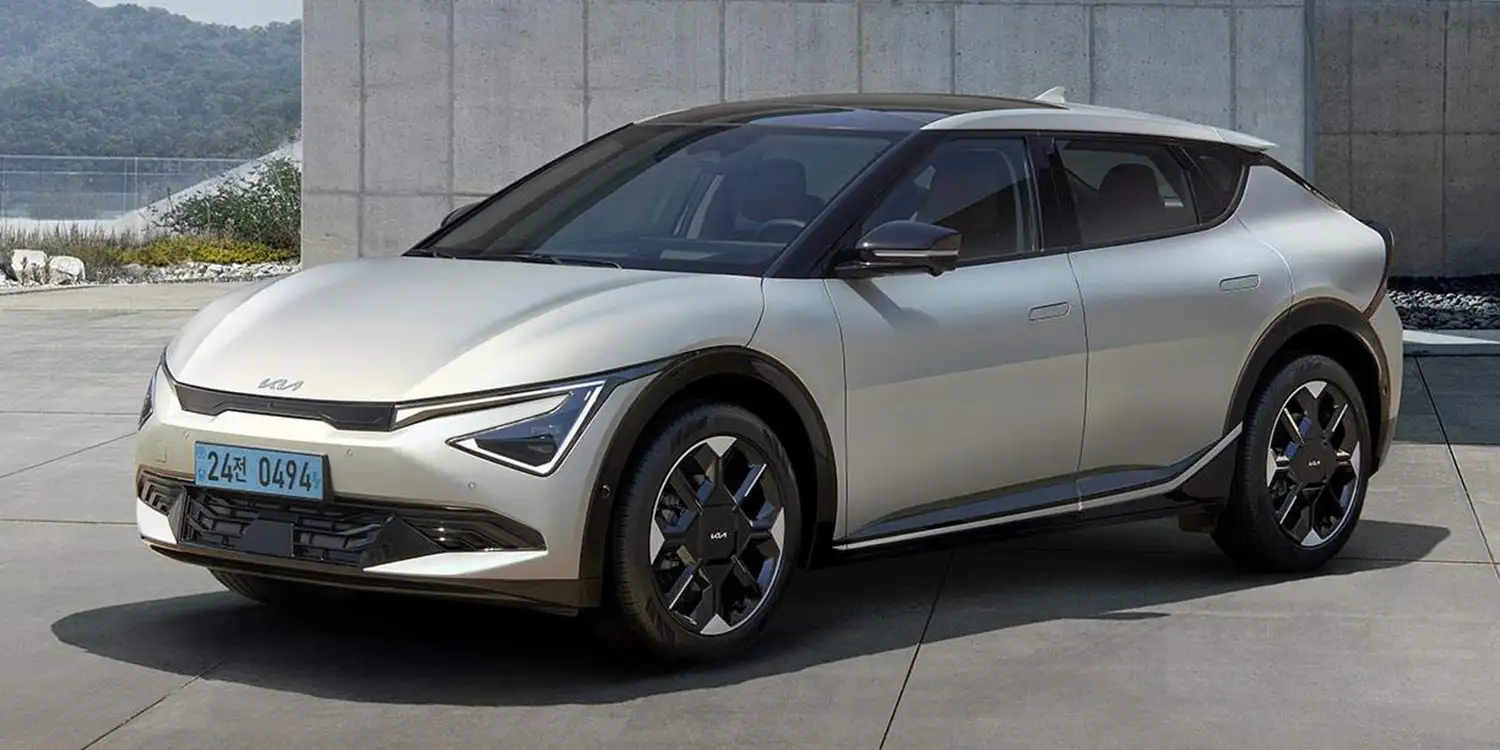

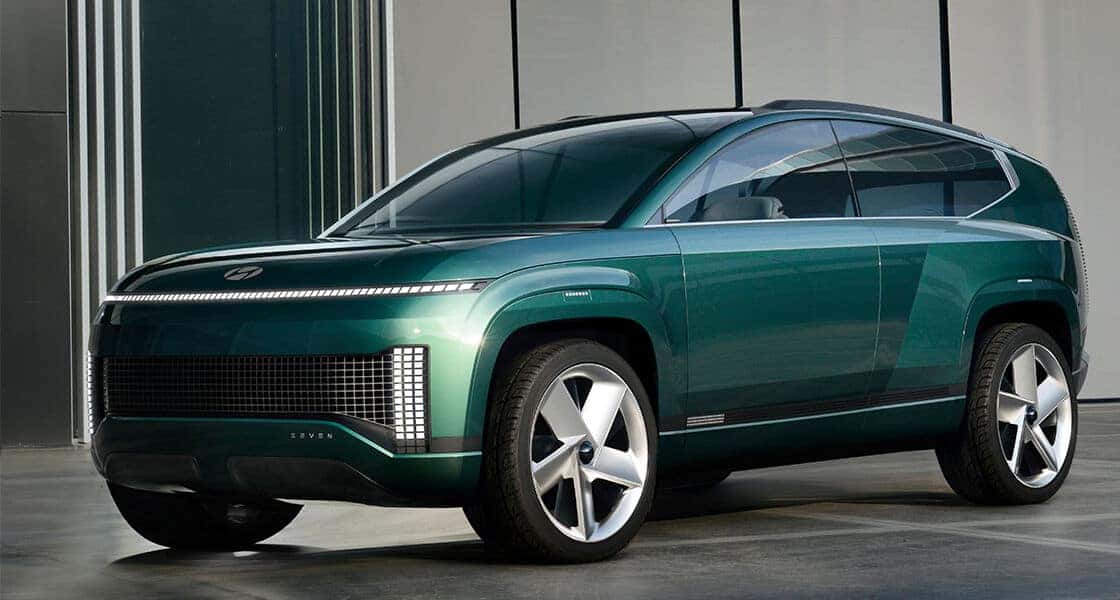

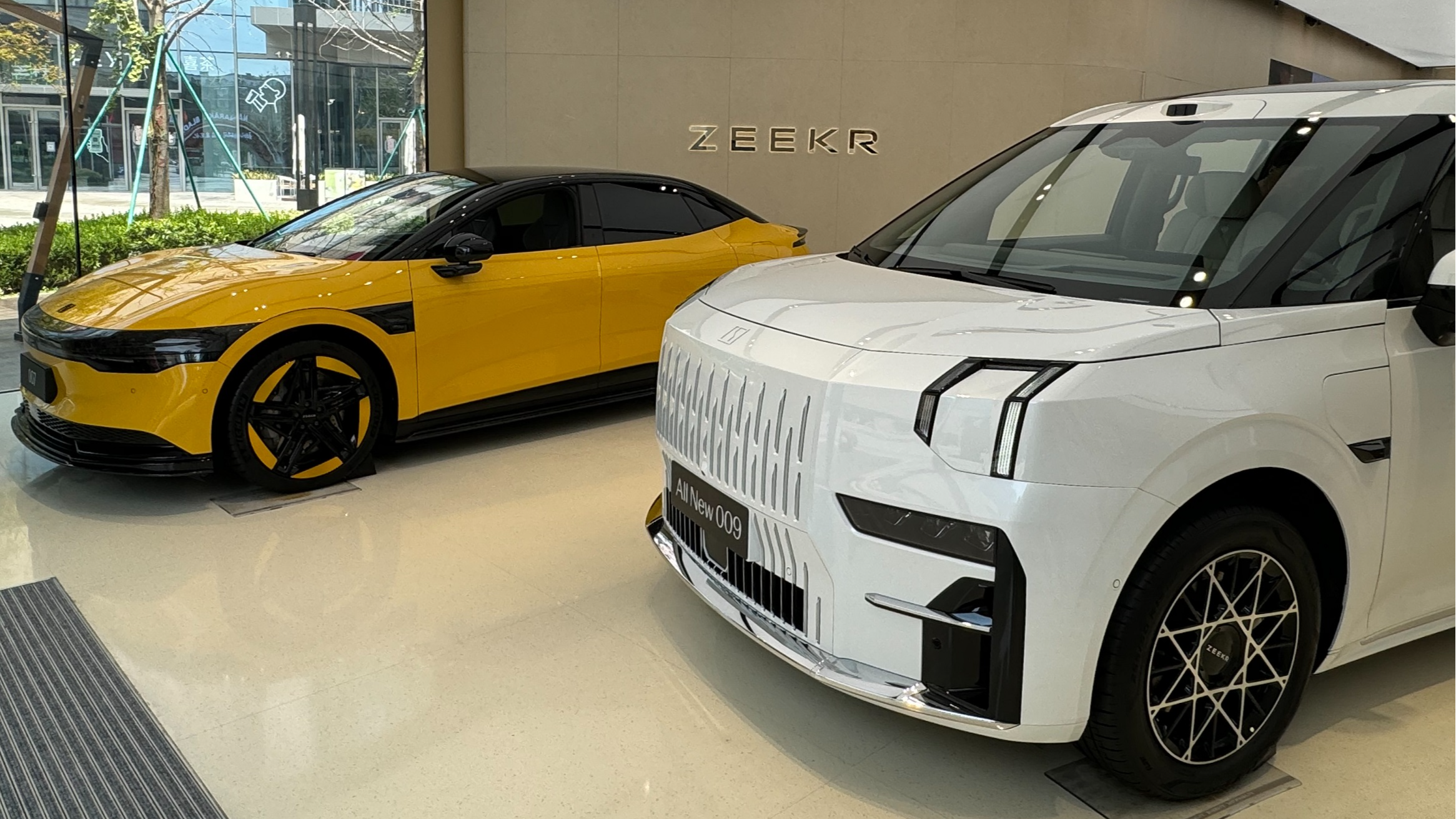

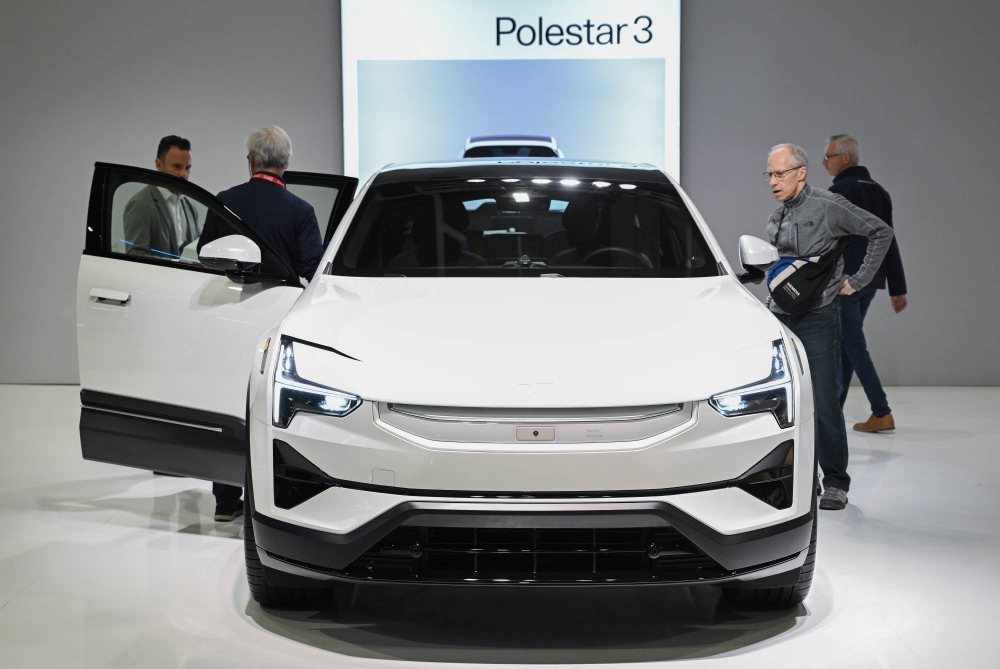
China’s dominance
- As of 2024, China produced 12.4 million electric cars—over 70 % of global production. (IEA)
- A recent report shows that in China, 99 % of BEV owners surveyed would consider buying another BEV — indicating high customer satisfaction and maturity of the market. (asianews.network)
- One example: BYD, the Chinese EV giant, is expanding its global ambitions markedly. (Le Monde.fr)
Japan & Korea
- In Korea and Japan, automakers are stepping up EV efforts and PBV (purpose-built vehicle) strategies:
- Kia (South Korea) has the PV5 electric van (PBV) slated for Europe and Korea, showing a broadening of EV beyond passenger cars. (Wikipedia)
- Asia overall: The region’s EV-revenue is forecast to reach ~$407.6 billion in 2025, highlighting strong growth momentum. (liahnson.com)
Strategic take-aways
- Asian manufacturers are increasingly competitive globally—with price, scale, integration of battery/EV tech—placing pressure on European/US players. (Forbes)
- For your interest in EV and property/home integration: The influx of more competitively priced Asian EVs (and PBVs) might provide more options for home-EV setups, possibly with better cost–benefit for charging infrastructure, solar/EV integration.
4. Summary – What to watch
- The EX60 launch (Jan 2026) by Volvo could be a strong candidate if you’re thinking of an EV aligned with your home/property improvement ecosystem.
- In Germany & Europe: While EV share is growing, pricing, demand, and infrastructure remain critical factors. Incentives, charging solutions (bundled home chargers + tariffs) are emerging.
- Asia: Innovation and competitive pressure from China/Korea/Japan mean more EV model options, possibly better pricing, and broadening EV-vehicle types (vans, PBVs) which may impact home charging infrastructure & planning.
- For your DIY/home project orientation: Consider how upcoming EVs will integrate with home chargers, smart grids, vehicle-to-grid (V2G) potential, and how purchasing price/totals evolve with higher volumes and manufacturing efficiency (as in Volvo’s SPA3 strategy).
Here’s the quick “what’s hot right now” :
EV news snapshot (Thu 21 Oct 2025)
1. BMW i3 Neue Klasse (next-gen)

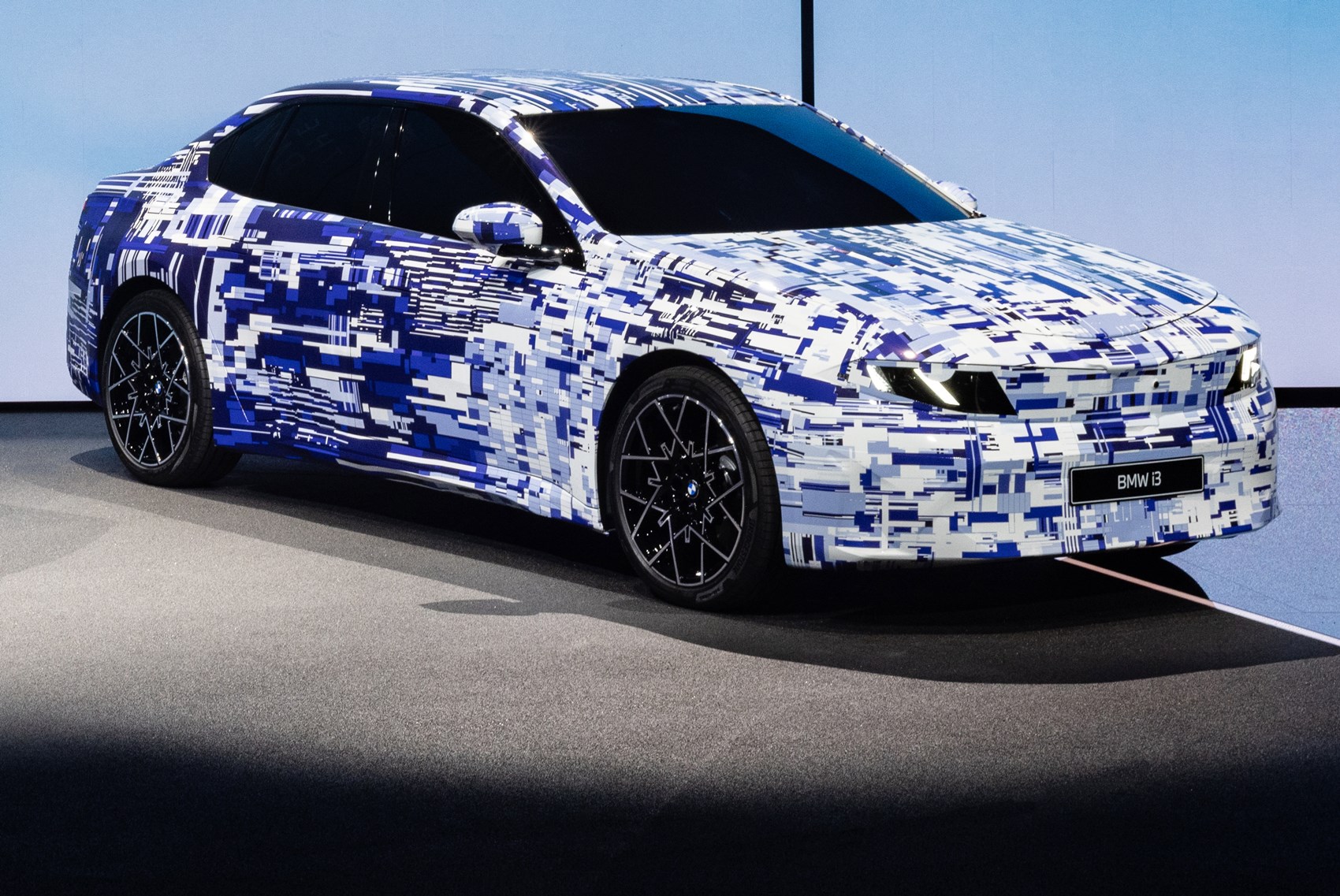

What we know so far:
- BMW is re-using the “i3” nameplate (previously used for the compact city hatch) for a new full-electric sedan version of its 3-Series sized vehicle. (Electrifying.com)
- This new i3 will sit on BMW’s “Neue Klasse” EV architecture (a clean-sheet electric platform) rather than being a derivative of an ICE model. (New Atlas)
- Key technical highlights announced:
- 800-volt electrical architecture enabling very fast charging. (Autocar)
- Battery pack and energy density improvements: BMW claims new generation cells with ~20% more energy and ~30% faster charging vs earlier generation. (Electrifying.com)
- BMW claims range of “500+ miles” (WLTP) for this sedan version. (Autocar)
- Launch timeline & positioning:
- Final production version expected early 2026, with full sales beginning later. (Electrifying.com)
- It will be positioned as an electric counterpart to the 3-Series (sedan) rather than as a small city EV. (New Atlas)
Why this is significant:
- The shift to a ground-up EV sedan (rather than ICE-derived) signals BMW treating electrification as a core strategy, not just an add-on.
- With 800 V architecture + high energy density cells + fast charging, BMW aims to compete strongly with the likes of Tesla Model 3 / other premium EVs in terms of range and charging speed.
- The name reuse (“i3”) is interesting: it may cause confusion (given the earlier i3 hatchback), but it also gives continuity and recognisability.
Things to keep an eye on / questions:
- How much will it cost? The previous small-i3 was relatively premium; this new version may cost more.
- Real-world range and charging performance (claims are strong, but real usage always matters).
- Whether BMW offers multiple variants (e.g., rear-wheel vs all-wheel drive, performance “M” version). Some sources suggest yes. (Car and Driver)
- Availability in different markets (Europe, US, China) and how charging infrastructure will support its fast charging claims.
Short summary:
BMW’s new i3 is a major step forward for the company in EVs: a full-sized electric sedan built on a new platform, with high ambitions for range and charging, expected around 2026.
2. Volvo EX60


What we know so far:
- The EX60 is a forthcoming fully electric mid-size premium SUV from Volvo. (Volvo Cars)
- It will be built on Volvo’s new SPA3 platform — the first Volvo to use it. (Wikipedia)
- Very strong battery / technology focus:
- Two battery chemistries will be offered: for example lithium-iron phosphate (LFP) for cost/volume, and higher-density nickel-manganese-cobalt (NMC) for range/performance. (InsideEVs)
- Use of prismatic cell format and “cell-to-body” structural integration in the battery pack (the battery becomes part of the vehicle structure) to improve efficiency and packaging. (EVDANCE)
- Launch timeline:
- Official reveal set for 21 January (Volvo announced) and production at the Torslanda plant in Gothenburg to begin in first half of 2026. (Volvo Cars)
- Strategic importance: Volvo views the EX60 as a “cornerstone” in its move to full electrification (Volvo aims to be fully electric by 2030). (Volvo Cars)
Why this is significant:
- Volvo is aggressive in upgrading whole vehicle architecture, battery integration and manufacturing, not just adapting existing models. The EX60 seems to be a flagship of that effort.
- The dual-chemistry battery approach gives flexibility: a more affordable entry version (LFP) and a high-capability version (NMC) depending on market/segment. That could help volume as well as premium positioning.
- Structural battery integration could yield better efficiency (longer range from same battery mass) and better packaging (more interior space).
- For buyers, a Swedish premium brand stepping up in EVs means more choice versus traditional ICE vehicles and more competition among EVs.
Things to keep an eye on / questions:
- Pricing. Early spec suggests around US $60k starting (in US markets) but this may vary. (Car and Driver)
- Actual real-world range, charging speed, and how the prismatic cell + structural battery design plays out in reliability and maintenance.
- Timing of global availability (Europe, US, Asia) and how quickly Volvo can ramp production.
- Software and system maturity — earlier Volvo EVs (e.g., EX90) have had software issues. (The Verge)
Short summary:
The Volvo EX60 looks to be a key EV model for Volvo: a mid-size premium SUV built from the ground up for EVs, with advanced battery tech, launching in 2026.
3. Quick comparison & take-aways
| Model | Segment | Technology Summit Points | Launch Time |
|---|---|---|---|
| BMW i3 | Electric sedan (~3-Series) | Neue Klasse platform, 800 V, 500+ miles range claim | Early 2026 sales |
| Volvo EX60 | Electric mid-size SUV | SPA3 platform, prismatic cells, dual battery chemistry | Production 1H 2026, reveal Jan 2026 |
Take-aways for EV buyers / watchers in Europe (and Sweden):
- If you are looking for a premium EV sedan from a known brand, BMW’s i3 looks promising — but likely will carry premium pricing and thus initial exclusivity.
- If you prefer a family-friendly SUV form factor with advanced EV tech, the Volvo EX60 is worth watching — especially in Sweden/Europe where Volvo has strong presence and infrastructure.
- Infrastructure (fast charging, network coverage) will still matter a lot: high charging speeds only matter if chargers exist locally.
- Early adoption may mean “first version” issues (software, production ramp-up). It can pay to wait a little for 1-2 years after launch unless you are fine with early-adopter risks.
- Price, incentives (in Sweden/EU) and total cost of ownership will influence the value proposition significantly.
EV news snapshot (Thu 16 Oct 2025), split by region:
Europe
- Record month: Global plug-in sales hit 2.1 million in Sept 2025 (+26% YoY). Europe contributed ~428k (+36% YoY). (Reuters)
- BYD expansion: Spain is the frontrunner for BYD’s 3rd European plant (after Hungary), per Reuters sources. (Reuters)
- EU–China trade backdrop: Analysis suggests the EU’s EV tariffs are unlikely to block Chinese brands’ profitability; Beijing has rolled out retaliatory probes. (gmfus.org)
- Germany revisiting aid: Reports point to targeted EV purchase incentives returning (including used EVs) as political proposals resurface. (Clean Energy Wire)
USA
- Federal credit expired: The $7,500 federal EV tax credit ended on Sept 30, 2025 (unless you had a binding purchase by then). Expect a Q4 dip after the pre-deadline rush. (irs.gov)
- Leasing workarounds pulled: GM and Ford dropped plans to route leases through captive finance to capture the credit post-expiry. (Reuters)
Asia
- China’s charging blitz: New 3-year plan targets 28 million charging facilities by end-2027 and >300 GW of public charging capacity—enough for 80 million EVs. (english.news.cn)
- China–India WTO case: China has filed a WTO complaint over India’s EV & battery subsidies; consultations are the first step. (The Times of India)
I

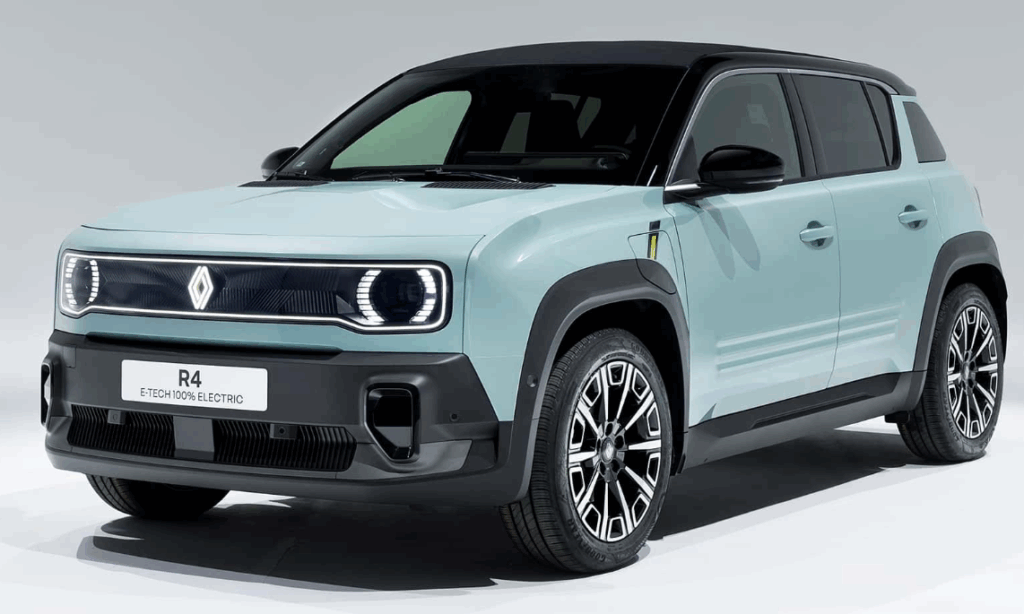
October/November 2025
Here’s a summary of some recent EV / electric-vehicle news (Oct / Nov period and around that) plus specs for various models, and what is known so far about the Renault 4 EV (E-Tech). The state of “news” is fluid, so some items are recent announcements or interviews.
- Porsche Cayenne EV
The Cayenne EV is expected to be fully revealed in November 2025, with new tech for charging, chassis, infotainment, etc. (Edmunds) - Tesla Model Y Performance (2025 / UK market)
- Output: ~ 460 bhp
- 0–60 mph in ~ 3.3 seconds
- Estimated range: ~ 360 miles (WLTP / equivalent) (The Electric Car Scheme)
- Renault 4 E-Tech (Renault’s revived small EV)
This one is quite interesting, as it’s a new electric version of an old icon. Here are its known / reported specs: Spec Value / Detail Battery 52 kWh Li-ion (NMC) for most versions (Electrifying.com) Motor / Power ~ 150 hp (≈ 110 kW) (Top Gear) Torque ~ 245 Nm (carwow.co.uk) 0–60 mph (≈ 0–100 km/h) ~ 8.2 seconds (carwow.co.uk) Range (WLTP / equivalent) ~ 241–247 miles (~ ≈ 388–398 km) (Electrifying.com) Alternative / lower spec “Entry” version rumored with 40 kWh battery and 90 kW motor, theoretical ~ 308 km range in some markets (CarExpert) Dimensions & weight ~ 4,144 mm length (compared to R5’s 3,922 mm) (carmagazine.co.uk) < 1,500 kg gross / curb weight in many trims (carmagazine.co.uk) Charging Up to 100 kW DC fast charge (10–80%) (Electrifying.com) Other features Vehicle-to-load (V2L) capability standard (Electrifying.com) Also, concept or variant info:- Renault revealed a Renault 4 Savane 4×4 concept with all-wheel drive. The regular Renault 4 has ~ 148 hp (110 kW) and ~ 245 Nm torque. (InsideEVs)
- Renault itself advertises up to 150 hp, 247 miles range in some markets on its site. (renault.co.uk)
Additional EV Models / Updates with Known Specs
Here are some other EVs / models with relatively recent spec data (some from 2025, some announced or updated):
- XPeng G6
- Battery options: 66 kWh LFP, 68.5 kWh LFP, 80.8 kWh LFP, or 80.8 / 87.5 kWh NMC depending on market (Wikipedia)
- Motor output: 190–218 kW (single / RWD) or up to 358 kW (AWD version) (Wikipedia)
- Range (CLTC): ~ 580–755 km depending on battery / trim (Wikipedia)
- Charging: AC 11 kW, DC fast charging 215–280 kW (Wikipedia)
- Leapmotor B10
- BYD Tang L (EV variant)
September/October 2025
Europe
- BYD just outsold Tesla in the EU for the 2nd straight month (Aug sales), as PHEVs + BEVs drove a broader market rebound; Tesla’s EU share fell while BYD ticked up. (Reuters)
- EU BEV share YTD sits ~15.8% and registrations are stabilising; ACEA’s fresh report dropped this week. (acea.auto)
- Tariffs & supply chain chess: CATL says it’s open to helping EU battery startups despite Chinese tech export controls—Europe wants local cells to cut costs/risks. (Financial Times)
China / wider Asia
- China’s EV penetration is at/near majority: multiple trackers put 2025 share ~50–60% (plugins), with August retail penetration ~55%. Xiaomi and XPeng are surging into Q4. (IEA)
- BYD’s halo moment: its Yangwang U9 “Xtreme” just claimed the world’s fastest production-car top-speed—first time an EV holds the crown. (Business Insider)
- BYD Europe build-out: Hungary car plant targeted to start by end-2025; adviser says EU battery production is next to support ~500k local capacity incl. Turkey. (Reuters)
South Korea
- Korea’s EV share is climbing: EVs are now ~1 in 5 new cars; BEV sales up ~48% YTD Jan–Aug on the back of new, more affordable models. (koreaherald.com)
- New model momentum: Kia EV5 pricing for Europe/Korea lands (~£39k UK) ahead of wider deliveries; Hyundai IONIQ 9 keeps racking up awards. (EV Powered)
United States
- Federal EV tax credits end next week (Sep 30). IRS has posted final guidance; a late-September pull-forward is boosting sales now, but a post-credit dip is widely expected. (irs.gov)
- Record U.S. EV month anyway: August hit a new high (~146k EVs; ~9.9% share) as buyers rushed before credits expire. (Cox Automotive Inc.)
- Policy/industry shifts: Automakers asked EPA to ease 2027–2032 tailpipe rules; meanwhile Honda is ending Acura ZDX production amid “market conditions.” (Reuters)
August/September – 2025
- New platforms & flagships (800 V, big range, fast DC) Porsche Macan Electric and Audi Q6 e-tron are the first on the shared PPE platform: 800 V, up to 270 kW DC and ~21 min 10–80%—this is the new mainstream premium benchmark. (Porsche Newsroom)
- BMW’s Neue Klasse is next BMW’s all-new EV architecture (first up: the next iX3/“Neue Klasse”) promises up to 30% more range, 30% faster charging and 25% better efficiency vs today’s cars; production in Debrecen (HU) ramps from late 2025. (Audi MediaCenter)
- Affordable EV wave (Europe) Kia EV3: compact SUV with up to ~600 km WLTP and ~30–31 min 10–80% on 400 V (≈128 kW peak). Renault 5 E-Tech: ~100 kW DC, priced from ~€25k in many markets. Citroën ë-C3: sub-€25k city crossover, ~44 kWh, ~100 kW DC. (kiapressoffice.com)
- Ultra-fast charging records Lotus Emeya has set the current headline figure: 10–80% in 14 min, peaking around 402 kW in independent P3 testing—evidence that >350 kW charging is now real in the wild. (lotuscars.com)
- Battery tech leaps (near-term impact likely in Chinese and EU-built models) CATL Shenxing Plus (LFP) claims 600 km of range added in 10 min and up to 1,000 km CLTC packs—expect more 4C fast-charge cars to appear on this chemistry. (Claims from CATL; rollout depends on automaker adoption.) (catl.com)
- Driver-assist & autonomy Mercedes DRIVE PILOT (SAE Level 3) approved up to 95 km/h on German motorways (eyes-off in defined conditions). Polestar 4 is slated to add Mobileye Chauffeur (future eyes-off highway capability) on top of SuperVision. (Mercedes-Benz Group)
- Policy & infrastructure (EU) AFIR is kicking in: from 2025, fast-charging (≥150 kW total per site) every 60 km along the TEN-T core network—good news for real-world road-tripping. EU Battery Regulation brings battery passports from Feb 2027; Volvo EX90 is launching one early. (IEA)
- Market & geopolitics The EU has imposed extra tariffs (up to ~38%) on China-built EVs; in parallel, Chinese brands localize: BYD says its Hungary plant starts production by end-2025 (reports of possible staging/slow ramp). (Reuters)
—————————————————————————————————————————–
Do you want EV news in your mailbox every week – SUBSCRIBE
Do you miss anything regarding EV’s on this site – send an email to info@ev-erything.com