

Volkswagen ID. Cross — essentially the electric successor/alternative to the T-Cross, while the new ID. Polo is the smaller hatchback sibling. The production ID. Cross has now been revealed and, importantly for Sweden, orders have already opened.
- CarJonas – VW ID. Cross First Drive (English audio) — detailed 32-minute test; driving starts at 28:56.
- AutoWeek – Volkswagen ID. Cross Test Drive — shorter test; driving starts at 6:27.
Volkswagen ID. Cross — EV-erything you need to know

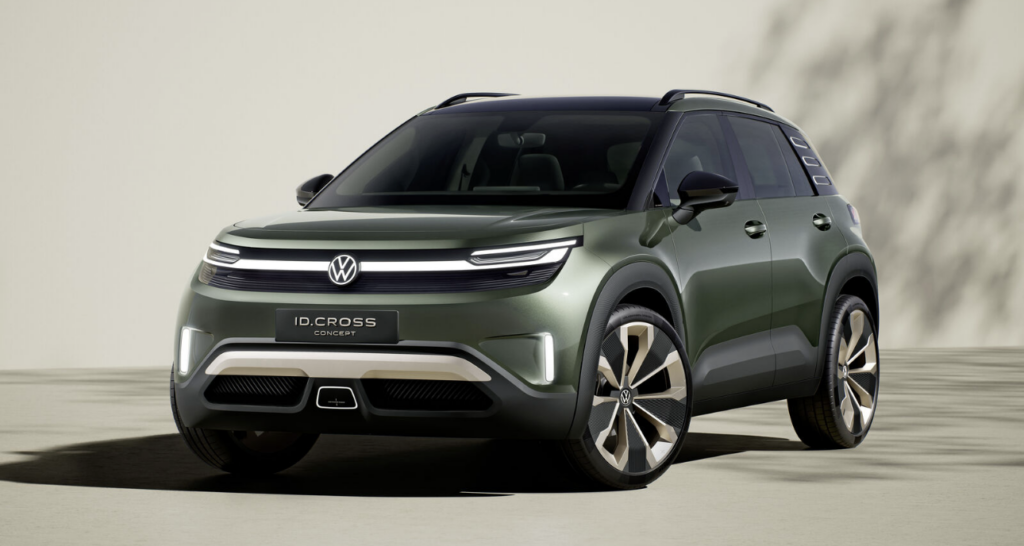
The ID. Cross is one of the most important cars in VW’s new generation of affordable EVs. It uses the new MEB+ architecture, has front-wheel drive, Volkswagen’s new APP290 electric motor, new unified battery cells, and a much more conventional interior than the first-generation ID cars. European market launch is scheduled for autumn 2026.
The key specifications
| ID. Cross 37 kWh | ID. Cross 52 kWh | |
| Battery usable | 37 kWh | 52 kWh |
| Chemistry | LFP | NMC |
| Power | 116 / 135 hp | 211 hp |
| Drive | FWD | FWD |
| WLTP range | up to ~316 km | up to ~427 km |
| DC charging | 90 kW | 105 kW |
| 10–80% | ~23 min | ~24 min |
| AC charging | 11 kW | 11 kW |
| V2L | 3.6 kW | 3.6 kW |
| Top speed | 150 km/h | 160 km/h |
| Towing | — | up to 1,200 kg |
Volkswagen is using two different versions of its new Group Unified Cell. The small 37-kWh battery uses LFP, while the 52-kWh battery uses NMC. Both use cell-to-pack construction.
The 105-kW maximum charging figure looks rather modest compared with modern 800-V EVs, but the relevant number is the charging time: VW quotes about 24 minutes from 10–80% for the 52-kWh car. That is quite reasonable for this battery size.
Size and practicality
The production car measures approximately:
4,153 mm long × 1,794 mm wide × 1,581 mm high, with a 2,601-mm wheelbase. Ground clearance is about 140 mm.
And VW has made unusually good use of that footprint.
The luggage compartment holds up to 475 litres, including a substantial 102-litre storage area below the boot floor, and there is also a frunk of up to 25 litres.
That makes it particularly interesting: at only about 4.15 metres long, the ID. Cross has the luggage capacity you’d normally expect from a noticeably larger SUV.
With the 52-kWh battery it can also tow up to 1,200 kg, with 75 kg nose weight and 75 kg roof load.
Interior — VW has listened

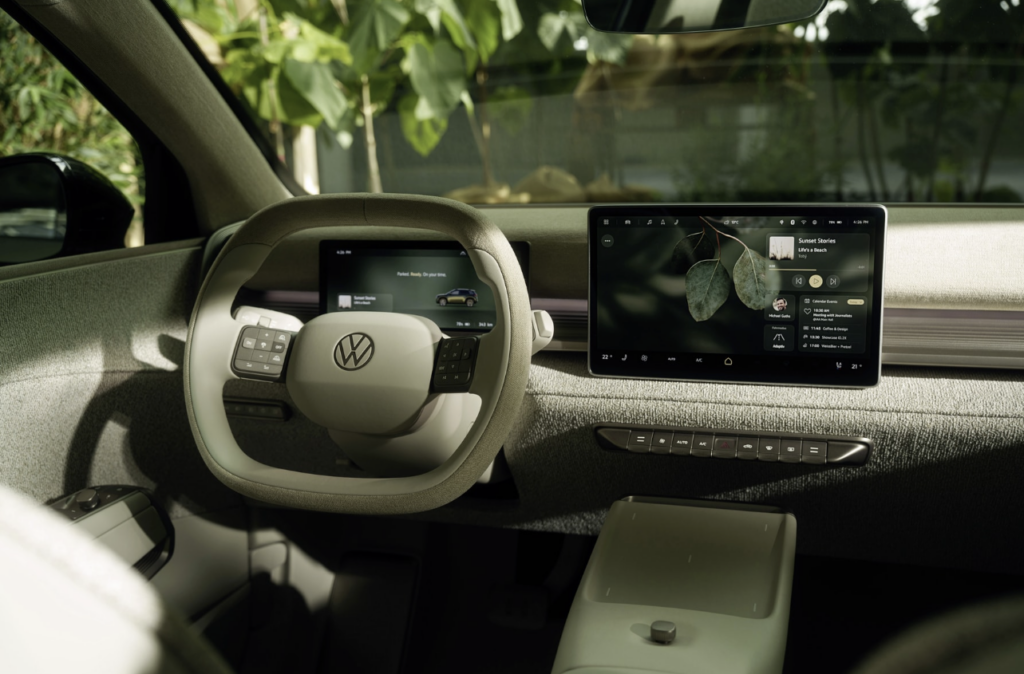
This may be one of the biggest improvements compared with the ID.3/ID.4 generation.
VW has brought back physical controls for important functions instead of forcing everything through touch-sensitive sliders. The production car gets a 10.25-inch Digital Cockpit Pro and 12.9-inch central Innovision infotainment display.
The interior also offers options such as electrically adjustable front seats with massage, panoramic roof and premium audio.
The concept images above are very close to the production design, although trim/material details obviously depend on version.
Interesting technology
There are several features here that make the ID. Cross more interesting than simply being a small electric SUV.
One-Pedal Driving is finally included, allowing substantial deceleration using the accelerator pedal alone.
There’s also Connected Travel Assist. The new system combines longitudinal and lateral assistance with online data and, unusually for this class, can recognise traffic lights. Within its operating limits, VW says it can recognise a red light and bring the car to a stop.
And there is V2L.
The car can provide up to 3.6 kW through an adapter connected to the charging port — enough to run tools, camping equipment, an electric grill or recharge e-bikes.
That’s a feature I particularly like seeing VW introduce further down its range.
Swedish prices 🇸🇪
This is where it becomes especially interesting.
VW Sweden has announced:
ID. Cross Trend
37 kWh / 116 hp
from SEK 355,900
ID. Cross Life
52 kWh / 211 hp
from SEK 461,900
ID. Cross Style
52 kWh / 211 hp
from SEK 486,900
Life and Style are already available to order in Sweden. The cheaper Trend is expected to become available around mid-October 2026.
Volkswagen Sweden – ID. Cross
The interesting question: ID. Cross or ID. Polo?
This is where VW’s new EV strategy starts making sense.
The ID. Polo is the lower, lighter hatchback. The ID. Cross gives you the higher seating position, SUV body, substantially more utility and up to 1,200-kg towing capacity.
Both are based around VW’s new small-EV technology rather than being downsized versions of the ID.4.