

Battery technology update — 11 October 2026

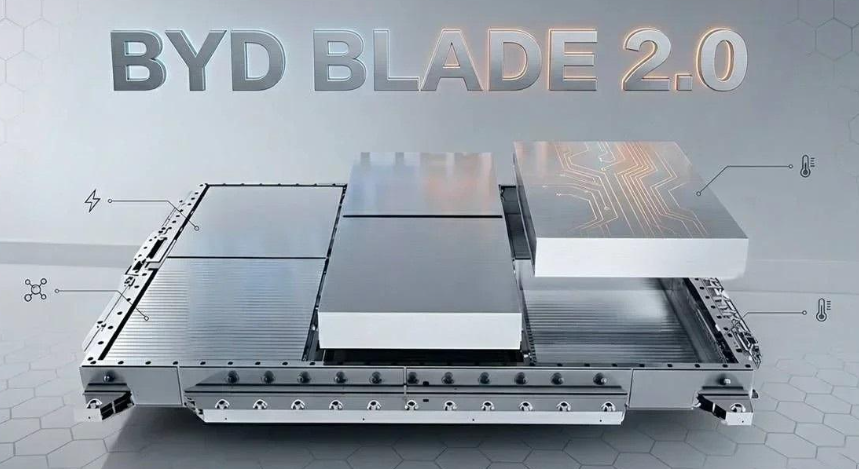
The biggest developments are much faster LFP charging, sodium-ion batteries moving toward industrial scale, and manufacturers expanding battery production for energy storage. Several headline figures remain manufacturer claims; announced launches and production targets should be distinguished from confirmed customer deliveries.
1. LFP: the charging race is accelerating
LFP means lithium iron phosphate. The latest announcements focus on reducing charging time and improving cold-weather performance.
| Manufacturer | Major 2026 announcement | Claimed performance |
|---|---|---|
| BYD / FinDreams | Second-generation Blade Battery, unveiled on 5 March | 10–70% in five minutes; 10–97% in nine minutes, using compatible FLASH charging equipment |
| CATL | Third-generation Shenxing, unveiled on 21 April | 10–80% in 3 minutes 44 seconds; 10–98% in 6 minutes 27 seconds |
BYD also reports a 5% increase in energy density. CATL claims more than 90% capacity retention after 1,000 complete cycles for its new Shenxing battery. These results come from the manufacturers and depend on the specified battery, temperature and charging system. (BYD)
For European buyers, Denza Z9GT is a model to watch: BYD identified it as the first European vehicle planned to receive Blade Battery 2.0 and FLASH Charging. The Chinese charging specification reaches 1,500 kW, so those charging times cannot be assumed at existing European public chargers. (BYD)
2. Sodium-ion “salt batteries”: a significant step toward cars
The relevant English term is sodium-ion battery.
CATL and Changan unveiled a sodium-ion passenger vehicle on 5 February 2026, with a market launch originally targeted for mid-2026. CATL’s announced Naxtra specifications include:
- Cell energy density of up to 175 Wh/kg.
- A vehicle range of more than 400 km, according to the launch announcement.
- Nearly three times the discharge power of an equivalent LFP battery at −30°C.
- More than 90% capacity retention at −40°C, under CATL’s test conditions. (catl.com)
Why this matters: sodium-ion could become particularly interesting for vehicles operating in cold climates. However, cold-temperature battery capacity is not the same as total winter driving range, which also depends on cabin heating and vehicle efficiency.
The rollout still needs careful tracking: CATL’s April announcement put full-scale Naxtra mass production at the end of 2026. The February unveiling therefore does not, by itself, establish widespread customer deliveries or European availability. (catl.com)
3. Sodium-ion’s clearest commercial expansion is in stationary storage
CATL unveiled its TENER Sodium energy-storage system in June. Its announced timetable was:
| Milestone | Announced timing |
|---|---|
| First Chinese customer deliveries | September 2026 |
| Cumulative shipments of 1 GWh | By the end of 2026 |
| International deliveries | From June 2027 |
CATL also announced a 60 GWh, three-year sodium-ion supply agreement with HyperStrong. This is a major commercial commitment, although a supply contract is different from completed installations. (catl.com)
In the United States, Peak Energy announced Sacramento as the location for a sodium-ion grid-storage factory in July 2026. Its partners include GM, while an agreement with Jupiter Power covers up to 4.75 GWh of systems for deployment between 2027 and 2030. These projects concern stationary storage rather than passenger-car batteries. (peakenergy.com)
4. The freshest manufacturer news: LG expands LFP for AI infrastructure
On 22 September 2026, LG Energy Solution announced that its energy-storage system had qualified as NVIDIA DSX Ready BESS, supporting power infrastructure for AI data centres.
LG also stated that it plans to secure more than 50 GWh of LFP cell-production capacity across five North American facilities by the end of 2026. This shows how battery investment is increasingly being driven by data centres and electricity infrastructure alongside EVs. (BATTERY INSIDE)
5. Europe: local LFP manufacturing remains an important development
CATL and Stellantis have begun construction of their Zaragoza LFP factory in Spain, designed for capacity of up to 50 GWh annually. The original agreement targeted production by the end of 2026; that target should not be treated as confirmation that commercial production has started. The project aims to supply more affordable European electric cars, crossovers and SUVs. (catl.com)
EV-erything assessment:
LFP’s most immediate opportunity is shorter charging stops.
Sodium-ion’s strongest emerging opportunities are cold-weather applications and large-scale storage.
For Swedish EV buyers, the next meaningful proof points are actual European models, local charger compatibility, independent winter tests and confirmed deliveries.